Newport Cliff Walk: How to Promenade Like a Vanderbilt
How to Experience Newport’s Gilded Age Mansions and Cliff Walk Like a Local

There is much more to the Newport Cliff Walk than meets the eye — Michael Denning / Unsplash
Newport, Rhode Island, is a place where the air smells of salt water, rugosa roses, and unimaginably old money. It is a town that stubbornly refuses to acknowledge the passage of the twentieth century if it means sacrificing a single gilded shingle or a manicured lawn. For the independent explorer, Newport offers a rare and thrilling opportunity to step directly into an Edith Wharton novel, provided you know which limestone pavers to step on and which tourist traps to elegantly sidestep.
The crown jewel of this experience is the Cliff Walk. It is a three-and-a-half-mile stretch of rugged coastline that serves as the literal backyard to some of the most ostentatious displays of American wealth ever constructed.
To the uninitiated, this pathway is merely a scenic place for a brisk morning walk. To the discerning traveler with Drives & Detours in their pocket, it is a complex, chronological narrative of fierce social ambition, architectural one-upmanship, and the occasional maritime disaster. You are not here to mindlessly follow a flag-waving guide. You are here to absorb the history at your own pace, pausing when the light hits the Atlantic just right, and moving on when the crowds become too thick.
The Architecture of Ambition and Avenues of Excess
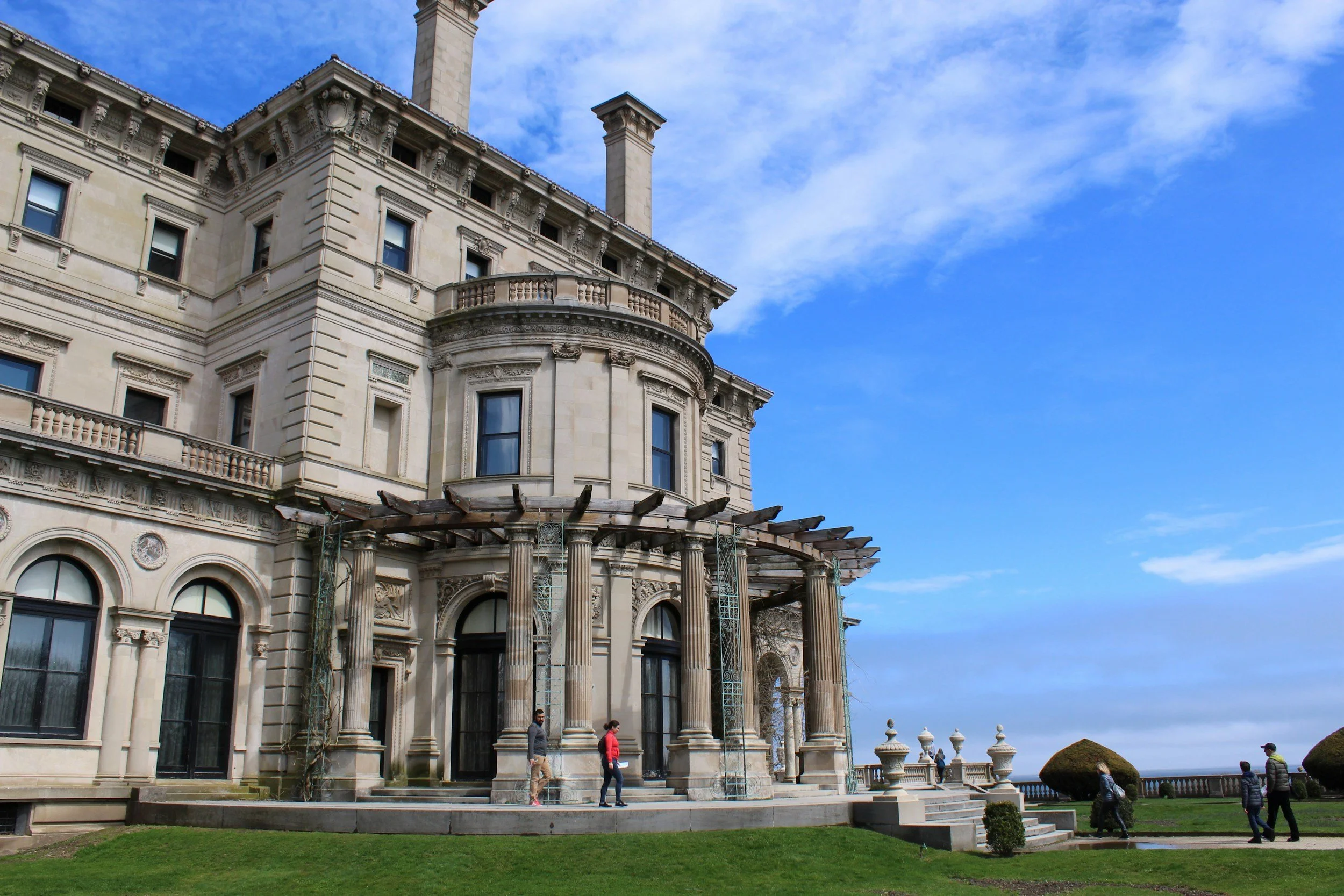
The titans of industry used to refer to their mansions as cottages during the gilded age — Gwendolyn Kwong / Unsplash
You are drawn to the Cliff Walk to witness the physical manifestation of the Gilded Age philosophy where excess was barely enough. Between the post-Civil War era and the First World War, the titans of the American industrial revolution spent their summers in Newport. The Vanderbilts, the Astors, and the Belmonts competed aggressively to see who could build the most massive summer retreat, ironically referring to their seventy-room Italian Renaissance palaces as mere cottages. Walking this trail alone allows you to dictate the pace of your own historical envy.
You can linger at the wrought-iron gates of The Breakers long enough to wonder if Cornelius Vanderbilt II ever actually felt comfortable in a house with sixty-five thousand square feet of floor space. The sheer scale of the limestone columns and the intricately carved loggias were designed to intimidate as much as they were to house a family for six weeks out of the year.
Further down the path, you can pause at Rosecliff, where the ghosts of spectacular, champagne-soaked garden parties still seem to linger in the ocean spray. The architecture here tells a story of a society desperate to legitimize its newfound industrial wealth by wrapping it in the trappings of European aristocracy.
A traditional tour guide might rattle off the dates these mansions were built and herd you toward the gift shop, but the independent explorer wants the texture of the life lived within these walls. They want to know why these massive structures face the ocean with such defiance, and how the invisible army of servants navigated the hidden tunnels beneath the perfectly rolled lawns. This is where rich context transforms a simple stroll into a journey through time.
Navigating the Micro-Climates and Cobblestones of Rhode Island
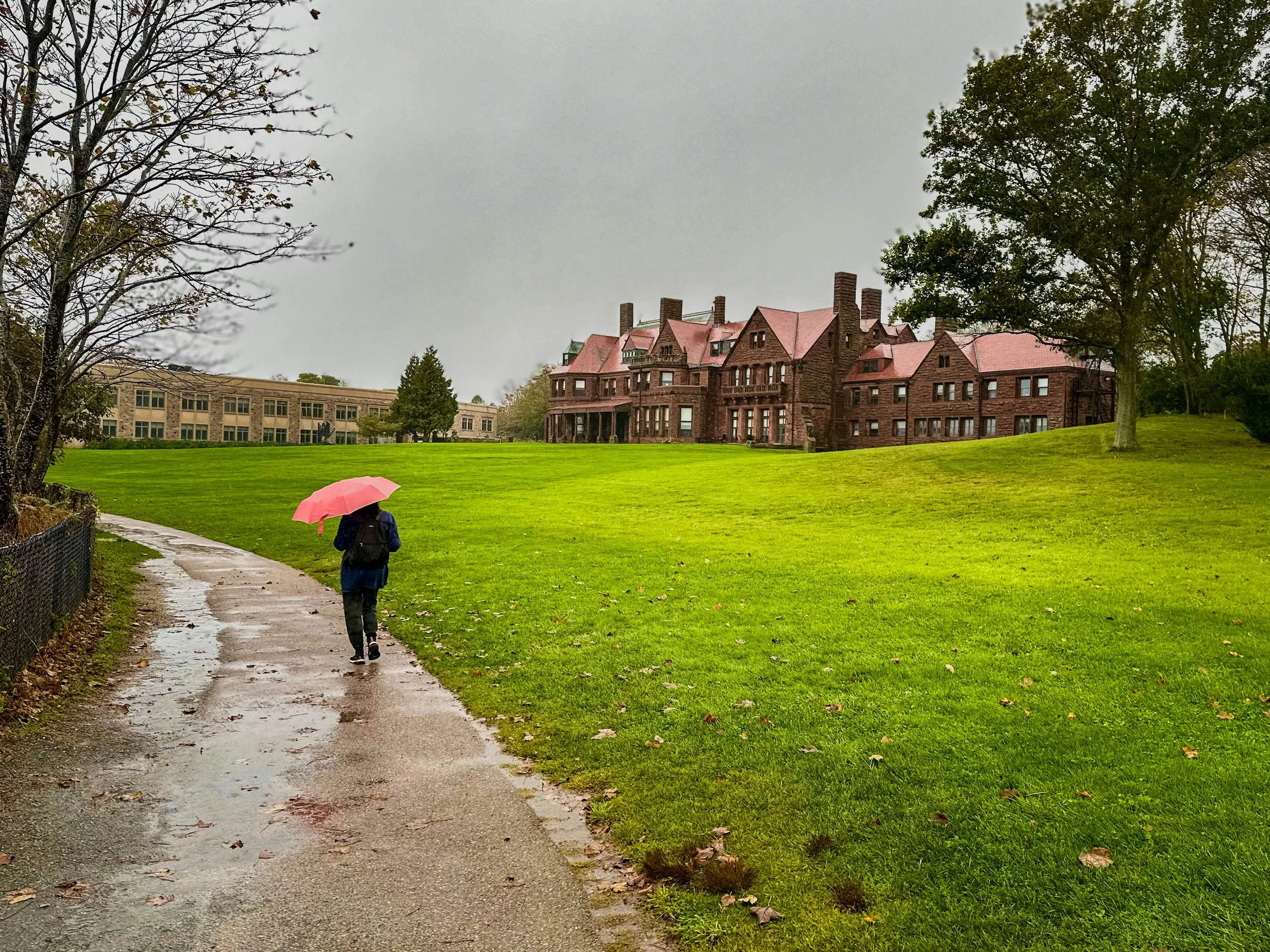
The weather in Newport is famous for being changeable — Rich Martello / Unsplash
Newport weather is notoriously temperamental, behaving much like an heiress denied her proper inheritance. It is entirely possible to begin your walk in blinding, humid sunshine and end it enveloped in a fog so thick you will swear you have been transported to a desolate moor.
Locals are well acquainted with the sudden temperature drops that roll in off the Atlantic. If the horizon disappears, there is no need to panic. The mist actually adds a magnificent layer of mystery to the mansions, softening the harsh edges of the limestone and making the estates look like spectral castles. You must, however, be mindful that the sea spray and fog make the granite rocks remarkably slippery.
This brings us to the crucial matter of footwear, which is a tale of two entirely different terrains. The northern half of the Cliff Walk, beginning near Memorial Boulevard, is beautifully paved and perfectly civilized. It is an easy, meandering path suitable for a polished leather loafer or a delicate sandal.
The southern half, conversely, abandons all pretense of a promenade and transforms into a rugged scramble over massive granite boulders. If you intend to conquer the entire three-and-a-half miles, you must choose footwear designed for actual hiking rather than a leisurely society luncheon.
Hydration is another matter for the independent planner. There are absolutely no convenient vending machines or refreshment stands tucked away on the back lawns of the Vanderbilt estates. It is imperative to fill your own flask before you begin your journey. If you require a caffeine fix to fuel your morning of exploration, skip the ubiquitous national chains. Instead, seek out Empire Tea & Coffee on Broadway for a meticulously crafted brew that will easily sustain you through hours of historical observation.
Hidden Histories the First-Timer Often Overlooks
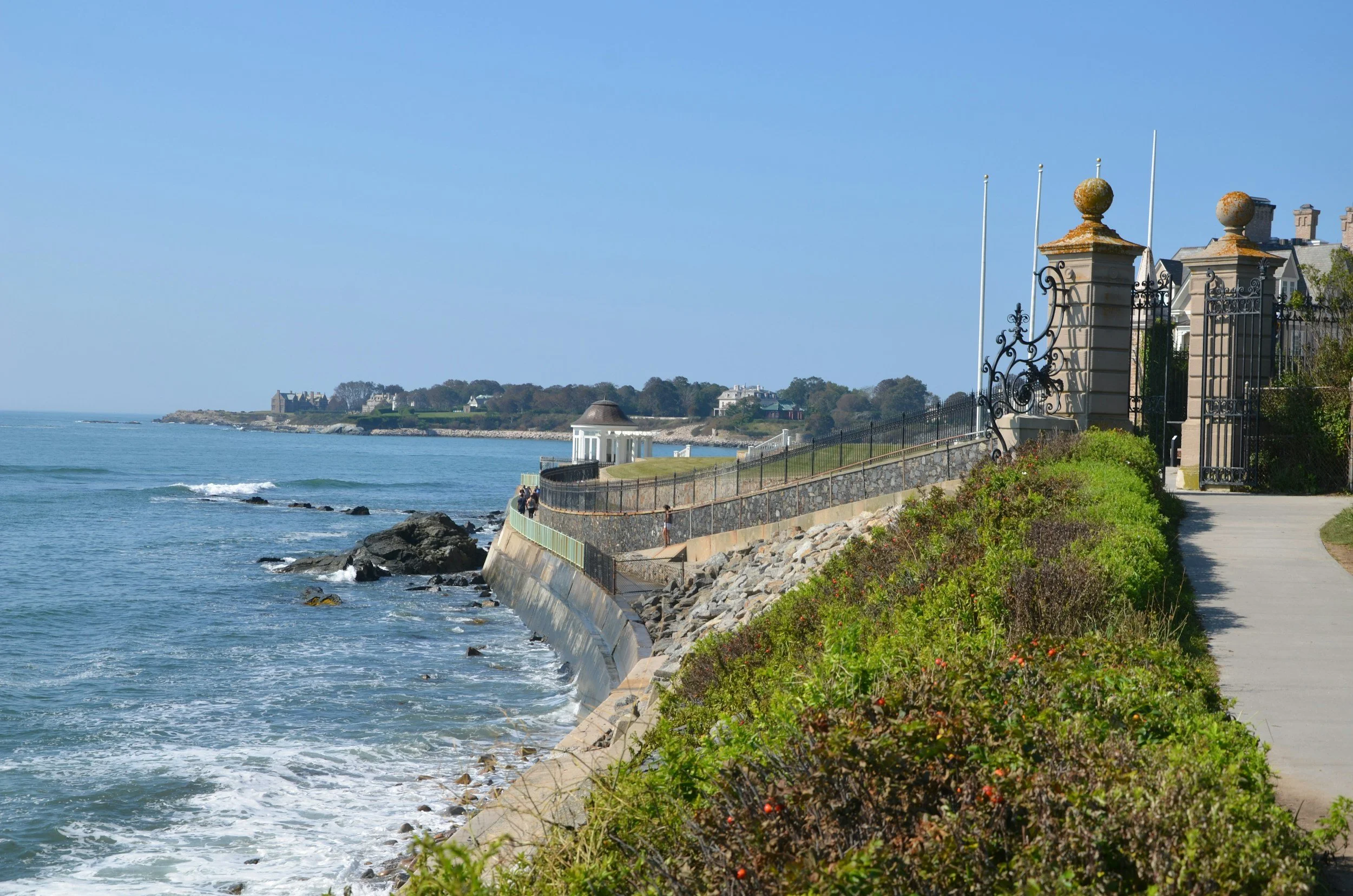
Newport Cliff Walk is full of nuanced history that many visitors miss — Larry Pozza / Unsplash
Many visitors treat the Cliff Walk as an athletic sprint to the finish line, completely missing the nuanced history beneath their feet. Consider the Forty Steps, located at the end of Narragansett Avenue. Today, it is a popular spot for photographs, but historically, this dramatic staircase was the designated gathering spot for the Irish servants who kept the Newport estates running.
While the Astors were sipping imported wines on the marble terraces above, the people who made their luxurious lives possible were dancing, socializing, and finding brief moments of joy on these very steps. It is a stark reminder of the massive class divide that defined the era.
As you continue south, you must look for the Chinese Tea House at Marble House. It sits perched precariously on the edge of the cliff, looking like a delicate porcelain doll against the rough Atlantic backdrop. It was built for Alva Vanderbilt, a woman who possessed a formidable will and a desire to make bold architectural statements. She used this striking pavilion to host rallies for the women's suffrage movement. It is these specific details, the fascinating intersection of massive wealth, personal eccentricity, and social progress, that make the walk profoundly engaging.
You should also appreciate the ground you are walking on from a legal perspective. The path itself was the site of a bitter, prolonged legal battle between the wealthy elite, who wanted to block access to their oceanfront yards, and the local fishermen, who insisted on their colonial-era right to walk the shoreline and harvest seaweed. The fishermen won, ensuring this spectacular view remained accessible to the public forever.
The Unspoken Etiquette of the Modern Traveler

Newport’s etiquette is unspoken but easy to follow once you know of it — Larry Pozza / Unsplash
Newport thrives on a specific, unspoken level of decorum. While the Cliff Walk is strictly public land, it passes directly through, and occasionally over, private estates. There are invisible boundaries that the modern traveler must respect. You must never be the person who attempts to spread a picnic blanket on the pristine grass of The Elms. The estate security teams have seen every trick imaginable, and they are never charmed by unauthorized trespassing.
Furthermore, if you see an artist sketching a specific cornice or a history student deeply engrossed in photographing a wrought-iron gate, it is customary to give them a wide berth. Newport is a legitimate pilgrimage site for architecture enthusiasts, and offering them quiet space is a mark of a sophisticated traveler.
The greatest joy of a self-guided experience is the ability to maintain this peaceful autonomy. If a large, noisy tour group suddenly arrives, clustering around a guide holding a brightly colored umbrella, you have the freedom to simply pause. You can sit on a stone bench, read a chapter of The Age of Innocence, and let the masses move on, leaving you in quiet contemplation of the sea.
Context Is Everything: The Drives and Detours Advantage
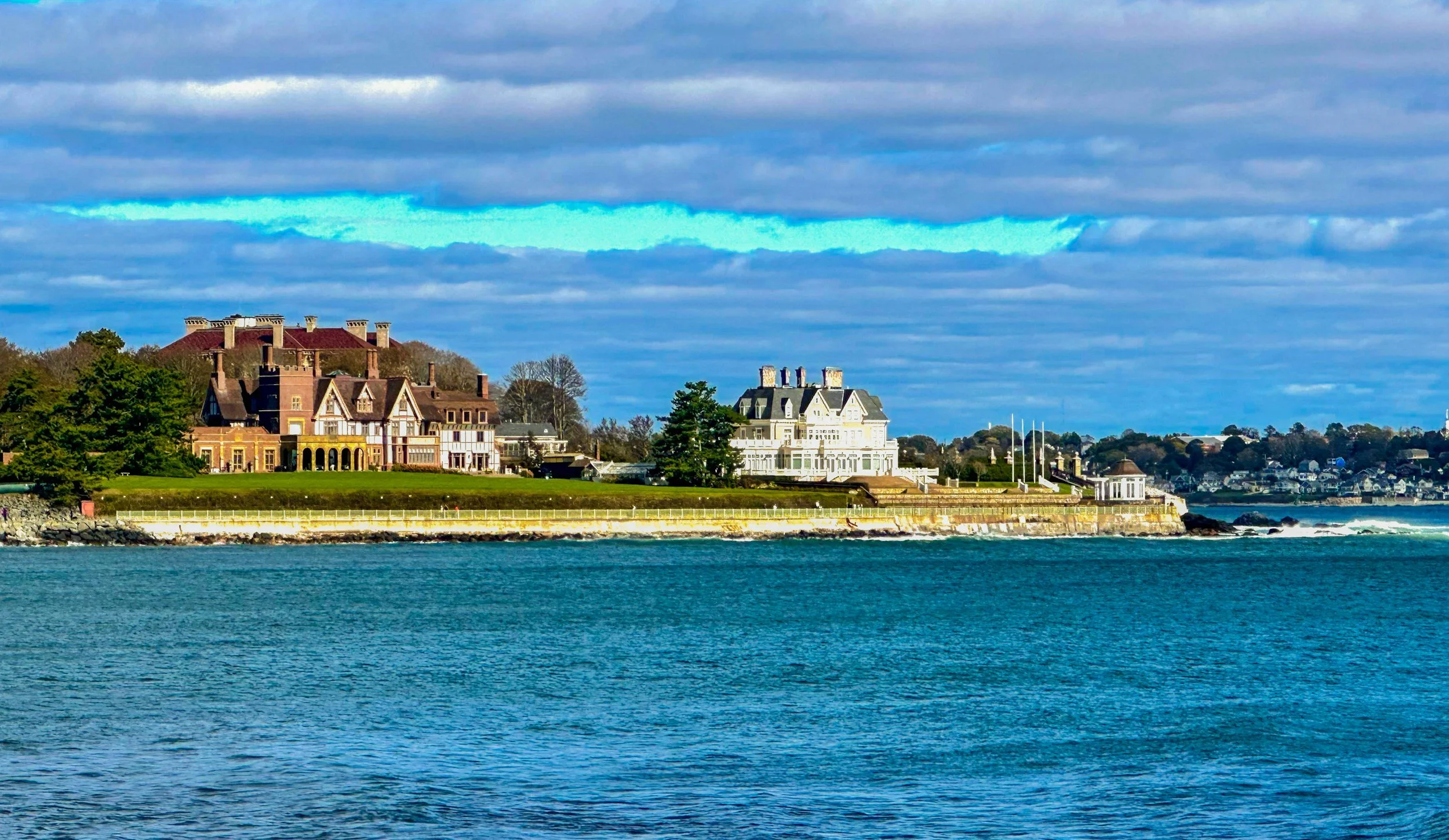
The best way to explore Newport Cliff Walk is with a Drives & Detours’ self-guided tour in your pocket — Rich Martello / Unsplash
The inherent challenge of the Cliff Walk is that its most fascinating stories are entirely invisible to the naked eye. The casual tourist sees a high stone wall, but we see the remnants of a bitter nineteenth-century property dispute. They see a magnificent gilded gate, but we see the site of a scandalous divorce that permanently altered the New York social register. Because there are no bus tours permitted on this narrow coastal path, you are entirely on your own when it comes to understanding what you are looking at.
This is precisely why you need the Drives & Detours Newport Cliff Walk Tour. By using our expertly crafted audio guide, you are not merely walking; you are deeply observing. You receive the critical historical context that transforms a pretty view into a compelling narrative. You can skip the architectural details that do not interest you and dive deeply into the scandalous rivalries of high society.
Most importantly, you remain in absolute control of your itinerary. If you wish to stop for an hour to watch the surfers conquer the waves at Ruggles, you can do so without a second thought. No bus is idling in a parking lot waiting for your return, and no guide will blow a whistle to hurry you along. You are free to explore Newport exactly as it should be experienced.