Yellowstone at Your Own Pace: The Top 6 Sights on the Grand Loop
Ditch the Tour Bus. Discover Yellowstone’s Magic on Your Schedule
Yellowstone is not just a destination, it is an entirely different world — Dennis Zhang / Unsplash
There is a moment when you first drive into Yellowstone National Park when the sheer scale of the landscape takes your breath away. Spanning over 2.2 million acres of hydrothermal wonders, alpine rivers, and dense forests, America’s first national park is not just a destination; it is an entirely different world.
But here is the hard truth about visiting Yellowstone: experiencing its true magic is almost impossible from the window of a crowded tour bus. When you are beholden to someone else’s rigid schedule, you don't have the luxury of pulling over to watch a grizzly bear forage in the distance or waiting an extra ten minutes for the perfect light to hit a vivid hot spring. You miss the essence of the park when you're rushing to follow a tour guide’s umbrella.
For the independent traveler—the one who wants to dig deep into the history, understand the geology, and explore entirely at their own pace—a self-guided approach is the only way to go.
If you are gearing up to tackle the famous Grand Loop, here are the top six can't-miss sights in Yellowstone National Park, along with a few insider tips on how to experience them on your own terms.
The Wild & The Untamed: Experiencing the Grand Loop
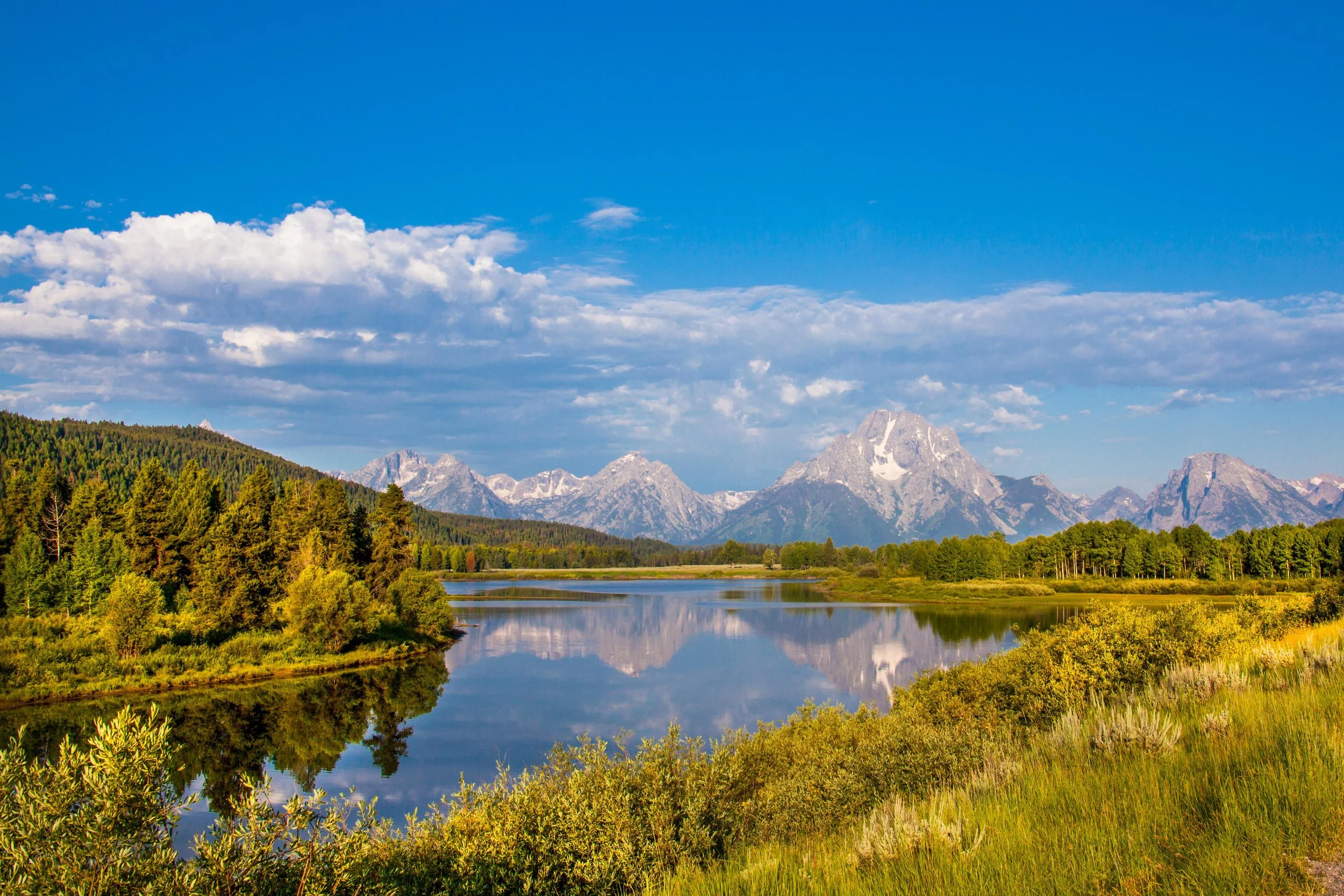
Yellowstone is a living landscape of fire and ice that rewards those who explore at their own pace — Mohan Nannapaneni / Pixabay
Yellowstone is not a place to be viewed through the scratched window of a charter bus on a strict timeline. It is a vast, living landscape of fire and ice that rewards those who slow down, take the detours, and explore on their own terms.
Grand Prismatic Spring: A breathtaking kaleidoscope of geothermal color best viewed from the elevated Fairy Falls overlook to escape the boardwalk steam and crowds
Old Faithful & Beyond: The world's most famous geyser is just the gateway; the surrounding Upper Geyser Basin holds a quarter of the planet's geysers, perfect for a quiet stroll after the tour buses depart
The Grand Canyon of the Yellowstone: A dramatic, 24-mile gorge painted in pink and gold, where hiking to the brink of the Lower Falls offers a thunderous, visceral perspective
Lamar Valley: Known as America’s Serengeti, this wide-open northeastern valley is the premier sanctuary for tracking wild wolf packs, grizzly bears, and sweeping herds of bison
Mammoth Hot Springs: A constantly shifting, living sculpture of travertine limestone terraces where local elk frequently lounge among historic park headquarters
West Thumb Geyser Basin: A serene lakeside convergence where boiling, vibrant hydrothermal pools overflow directly into the icy, deep blue waters of Yellowstone Lake
The Freedom of Audio Guide: Seamless GPS-triggered narration brings the park's deep geological history and hidden lore to life inside your own car, balancing expert insight with total independence
1. Grand Prismatic Spring: A Kaleidoscope of Geothermal Art
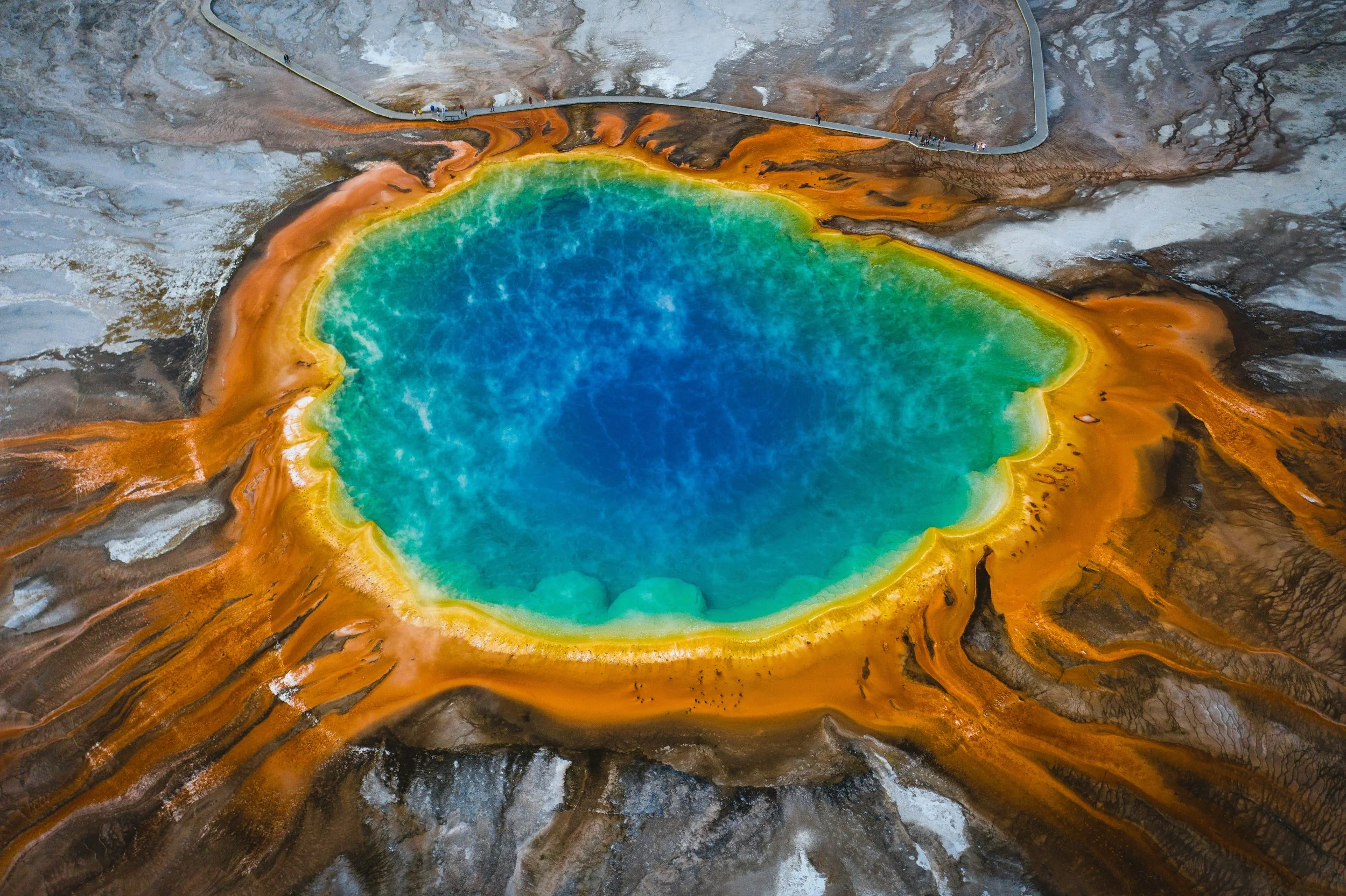
The colors of Grand Prismatic Spring will leave you speechless — Denys Nevozhai / Unsplash
If there is one image that defines the otherworldly beauty of Yellowstone, it is the Grand Prismatic Spring. Located in the Midway Geyser Basin, this is the largest hot spring in the United States and the third largest in the world. But it isn't the size that leaves visitors speechless—it's the color.
The spring looks like a giant, vibrant eye staring up from the earth, radiating rings of deep blue, bright teal, glowing yellow, and fiery orange. These remarkable colors are actually created by thermophiles—heat-loving bacteria that thrive in the extreme temperatures of the water.
The Independent Traveler's Tip: Tour buses will drop you off at the main boardwalk, which is beautiful, but often obscured by thick steam in the cool morning air. Because you are on your own schedule, skip the immediate rush and drive just south to the Fairy Falls Trailhead.
A short, one-mile hike will take you to the Grand Prismatic Overlook. Looking down on the spring from above provides the absolute best view of the colors, far away from the elbow-to-elbow crowds on the boardwalk.
2. Old Faithful and the Upper Geyser Basin
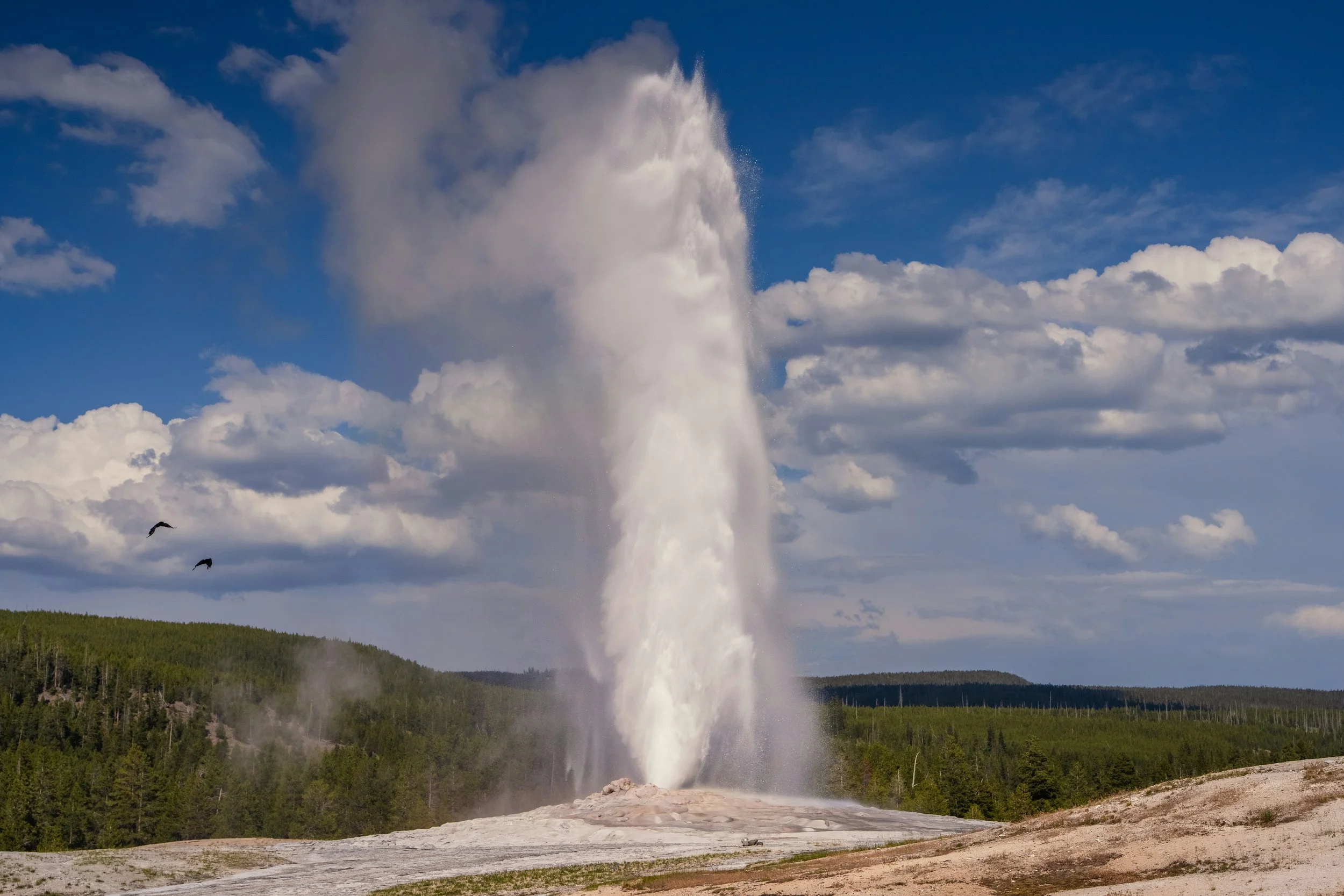
You could almost set your watch by Old Faithful’s eruptions— Simeon Muller / Unsplash
It is arguably the most famous geological feature on the planet. Old Faithful earned its name because of its remarkable punctuality, erupting roughly every 60 to 110 minutes, shooting boiling water up to 180 feet in the air.
While Old Faithful is the star of the show, the true magic lies in the surrounding Upper Geyser Basin. This relatively small square mile holds nearly a quarter of all the geysers in the world.
The Independent Traveler's Tip: Most group tours park, watch Old Faithful erupt, buy a souvenir, and immediately herd their groups back onto the bus. Don't make this mistake. Once the famous geyser finishes its show, the crowds disperse. Take this opportunity to walk the paved trails of the Upper Geyser Basin.
Wander past Morning Glory Pool, Castle Geyser, and Daisy Geyser. With an audio tour playing in your car on the way there, you'll already understand the complex underground plumbing that makes these geysers tick, giving you a much deeper appreciation as you wander in peace.
3. The Grand Canyon of the Yellowstone
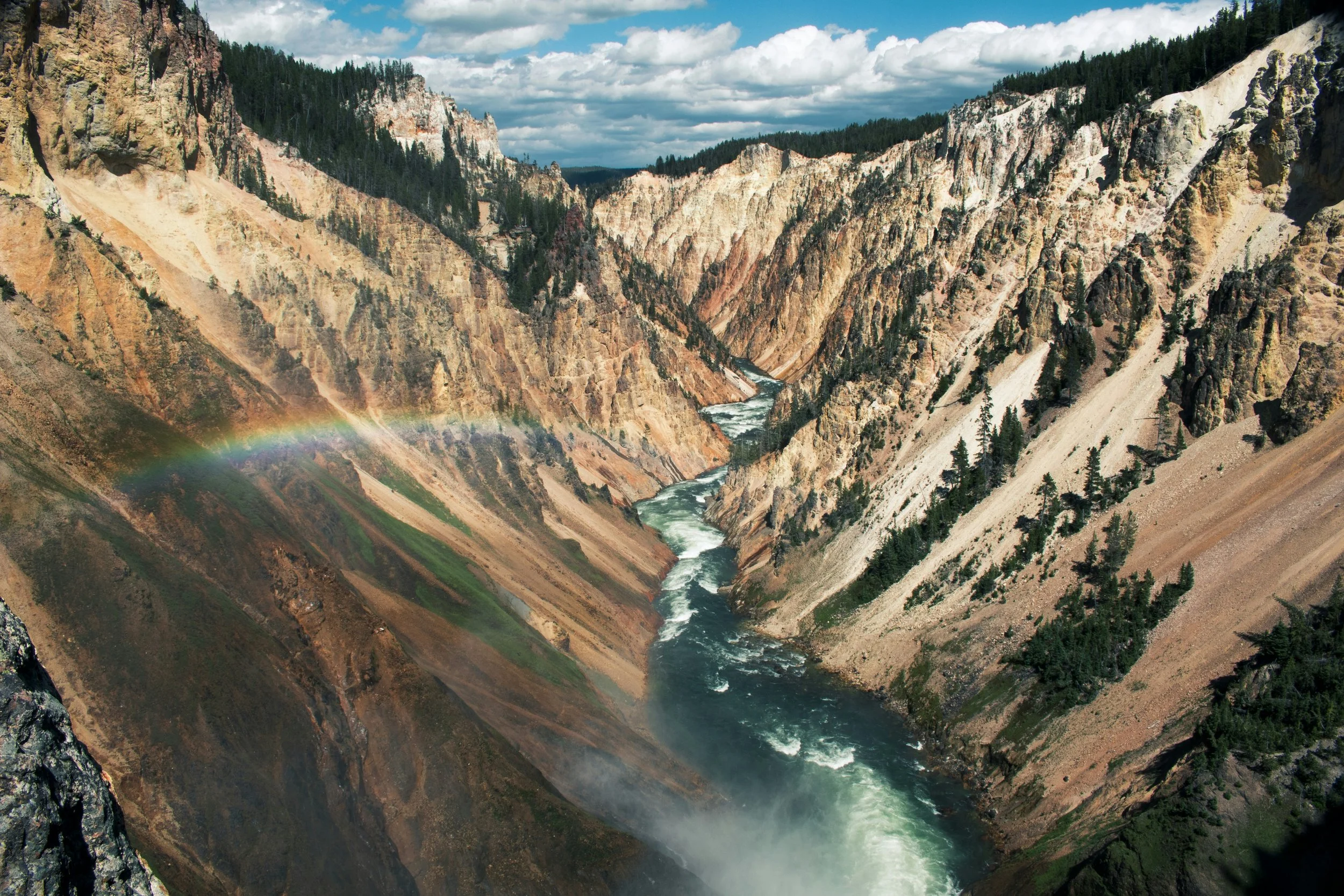
The Grand Canyon of the Yellowstone is where the national park gets its name from — Austin Farrington / Unsplash
Millions of years of geothermal activity, combined with the relentless carving of the Yellowstone River, have created one of the most dramatic landscapes in the American West: The Grand Canyon of the Yellowstone. Stretching for 24 miles, this massive gorge is painted in brilliant hues of yellow, pink, and orange rock—which is actually where the park gets its name.
The undisputed highlight here is the Lower Falls. Plunging 308 feet (that is twice as high as Niagara Falls), the sheer power and thunderous roar of the water are awe-inspiring.
The Independent Traveler's Tip: Artist Point on the South Rim offers the classic, postcard-perfect view of the canyon and the falls. However, because you aren't rushing to meet a departure deadline, take the time to drive to the North Rim and hike down the Brink of the Lower Falls trail. It is steep, but standing directly at the top of the waterfall as millions of gallons of water rush over the edge is a visceral experience you cannot get from a scenic drive-by.
4. Lamar Valley: America’s Serengeti
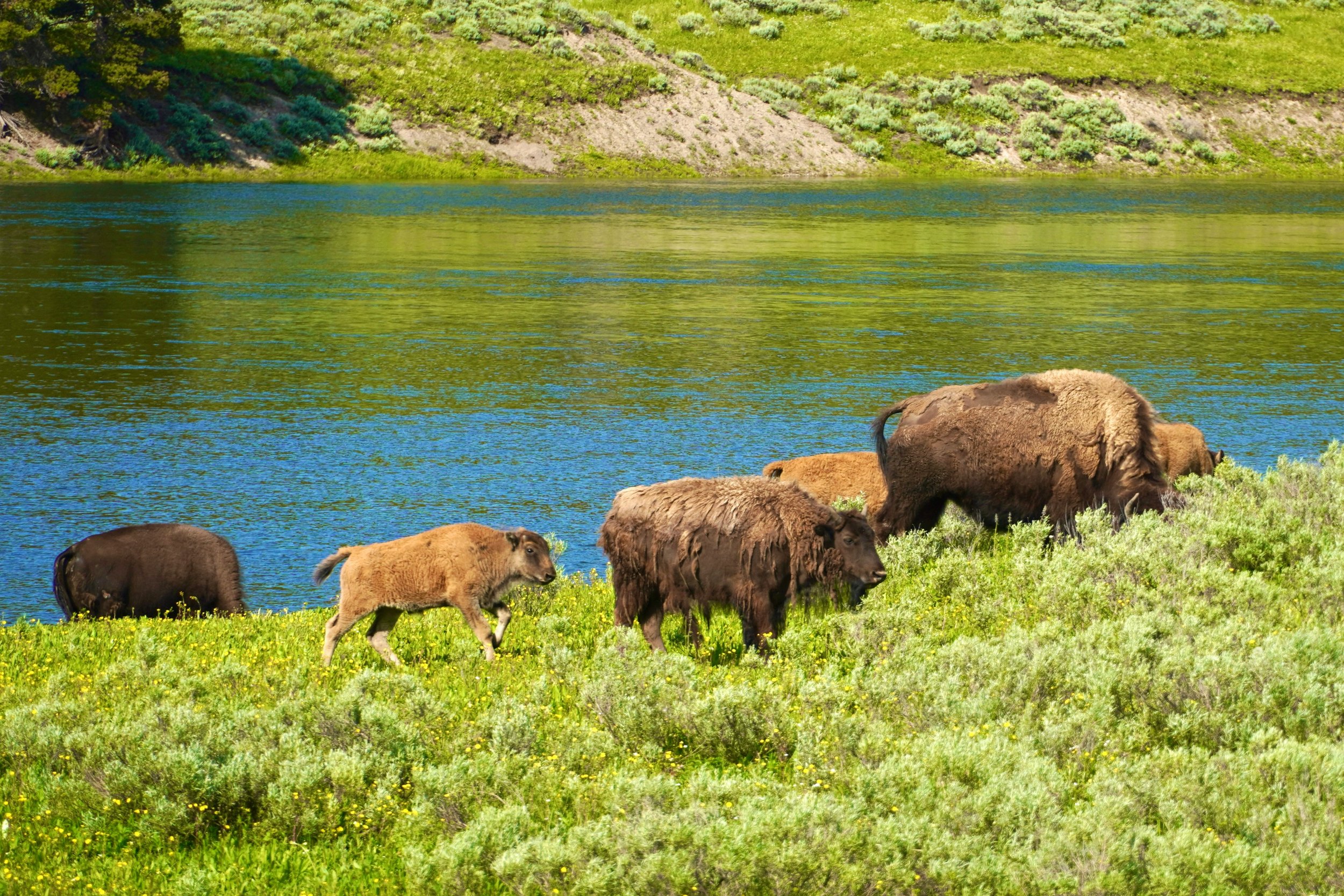
The Lamar Valley is your best bet for spotting the park’s wildlife — Meina Yin / Unsplash
If your goal is to see wildlife, Lamar Valley is your sanctuary. Located in the remote northeastern corner of the park, this sweeping, wide-open valley is home to some of the densest populations of wildlife in North America.
It is here that you have the best chance of spotting the famous Junction Butte or Lamar Canyon wolf packs. You will also see massive herds of bison grazing the plains, pronghorn antelope darting through the sagebrush, and grizzly bears foraging along the tree line.
The Independent Traveler's Tip: Wildlife doesn't care about a tourist's schedule. They are most active at dawn and dusk. Group tours rarely arrive in Lamar Valley early enough to catch the morning action.
Because you are in the driver's seat, wake up before the sun, pack a thermos of coffee, and drive into the valley as the morning mist burns off. Bring binoculars, pull into a turnout, and simply wait. The quiet patience of a self-guided traveler is almost always rewarded here.
5. Mammoth Hot Springs: The Living Sculpture
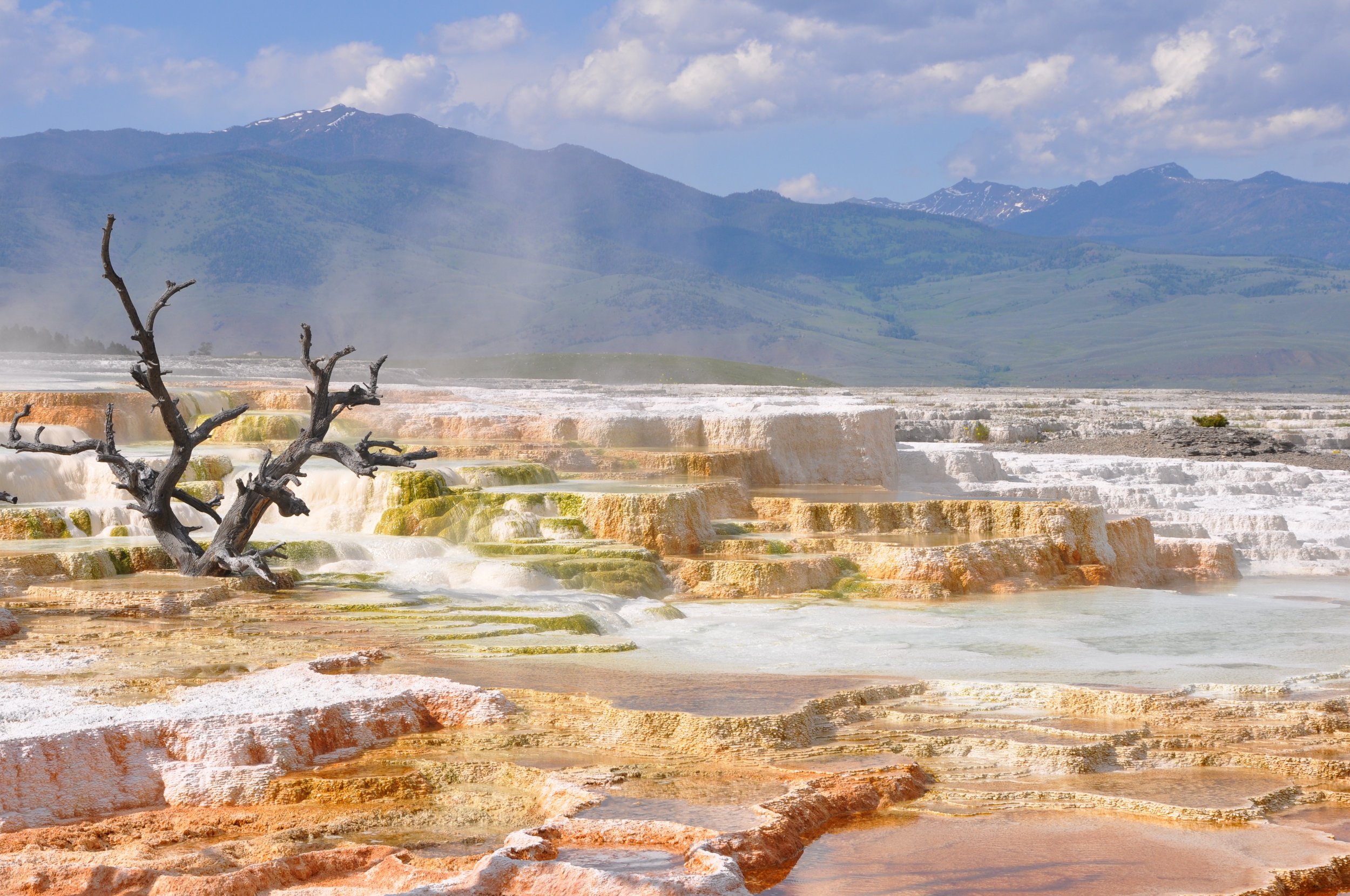
Mammoth Hot Springs is a constantly changing landscape of travertine terraces — jbark44 / Pixabay
Located near the North Entrance of the park, Mammoth Hot Springs looks completely different from the geyser basins in the south. Instead of bursting water, Mammoth is a constantly changing landscape of travertine terraces.
Heated water rises through limestone, dissolving the rock and depositing it on the surface to create stunning, chalk-white staircases streaked with orange and brown bacteria. Because the hydrothermal vents frequently shift, the terraces are literally living sculptures, changing shape, color, and flow from year to year.
The Independent Traveler's Tip: Mammoth is also the park headquarters and a favorite hangout spot for the local elk population. You will often see massive bull elk resting right on the lawns of the historic buildings.
Take your time driving the Upper Terrace Drive—a narrow, winding, one-way loop that large RVs and buses are forbidden to enter. It is a perk exclusively reserved for those in standard vehicles traveling independently!
6. Yellowstone Lake and the West Thumb Geyser Basin
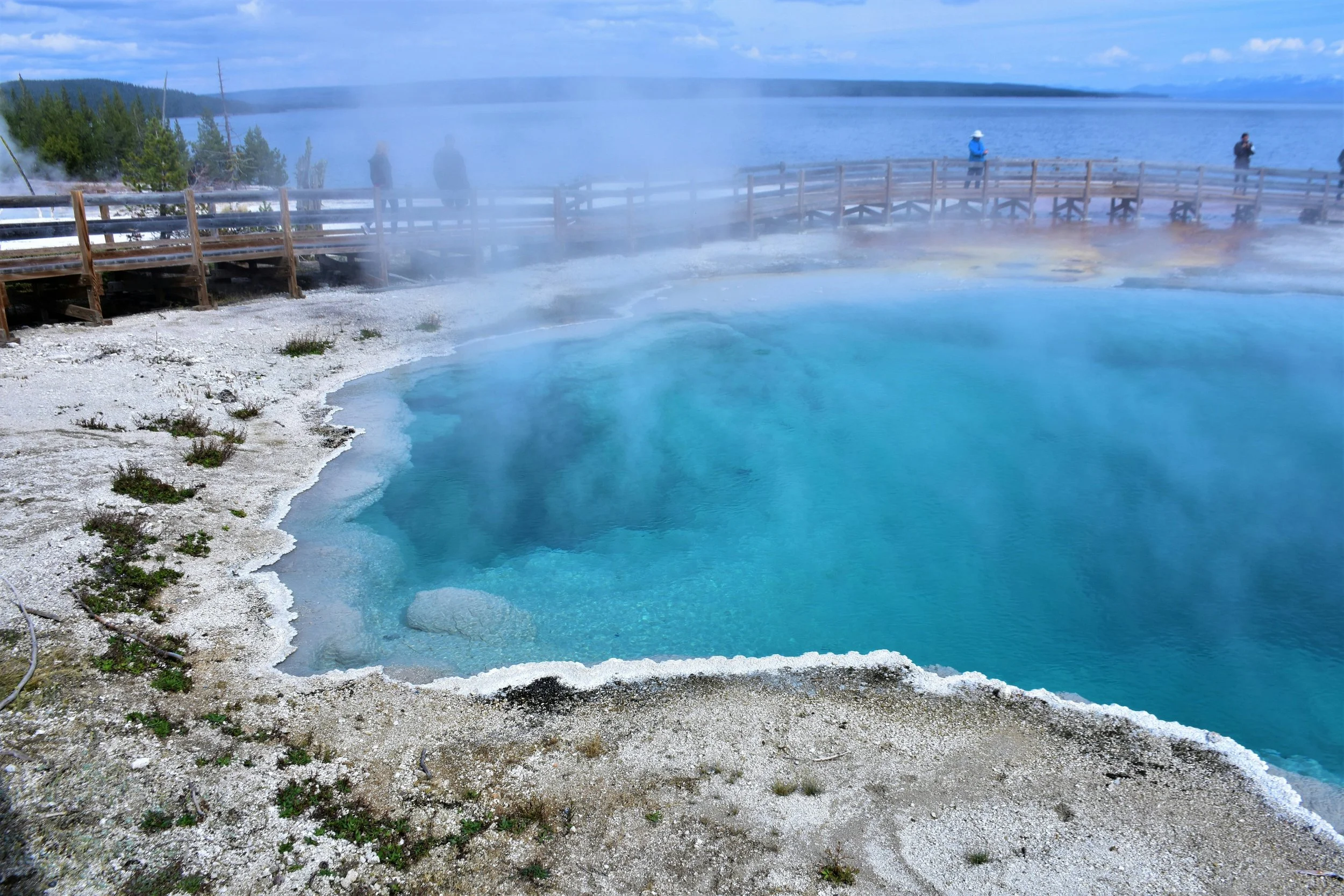
West Thumb Geyser Basin shows a huge contrast between geothermal features and Yellowstone Lake — Nancy Hann / Unsplash
Sitting at an elevation of 7,732 feet, Yellowstone Lake is the largest high-elevation lake in North America. Its icy, deep blue waters provide a stark and beautiful contrast to the fiery geothermal features that surround it.
The best place to experience this contrast is the West Thumb Geyser Basin, located right on the shores of the lake. Here, you can walk boardwalks that take you past bubbling mud pots and vibrant pools that literally overflow directly into the frigid waters of the lake. You might even spot the famous Fishing Cone, a hot spring right in the lake where early explorers supposedly used to catch a fish and immediately boil it on the hook!
The Independent Traveler's Tip: This area is incredibly peaceful. Let the hurried tourists rush by. Sit on a bench overlooking the lake, listen to the gentle lap of the water against the hydrothermal crust, and take in the sheer majesty of the caldera you are standing inside.
Experience Yellowstone With Drives & Detours
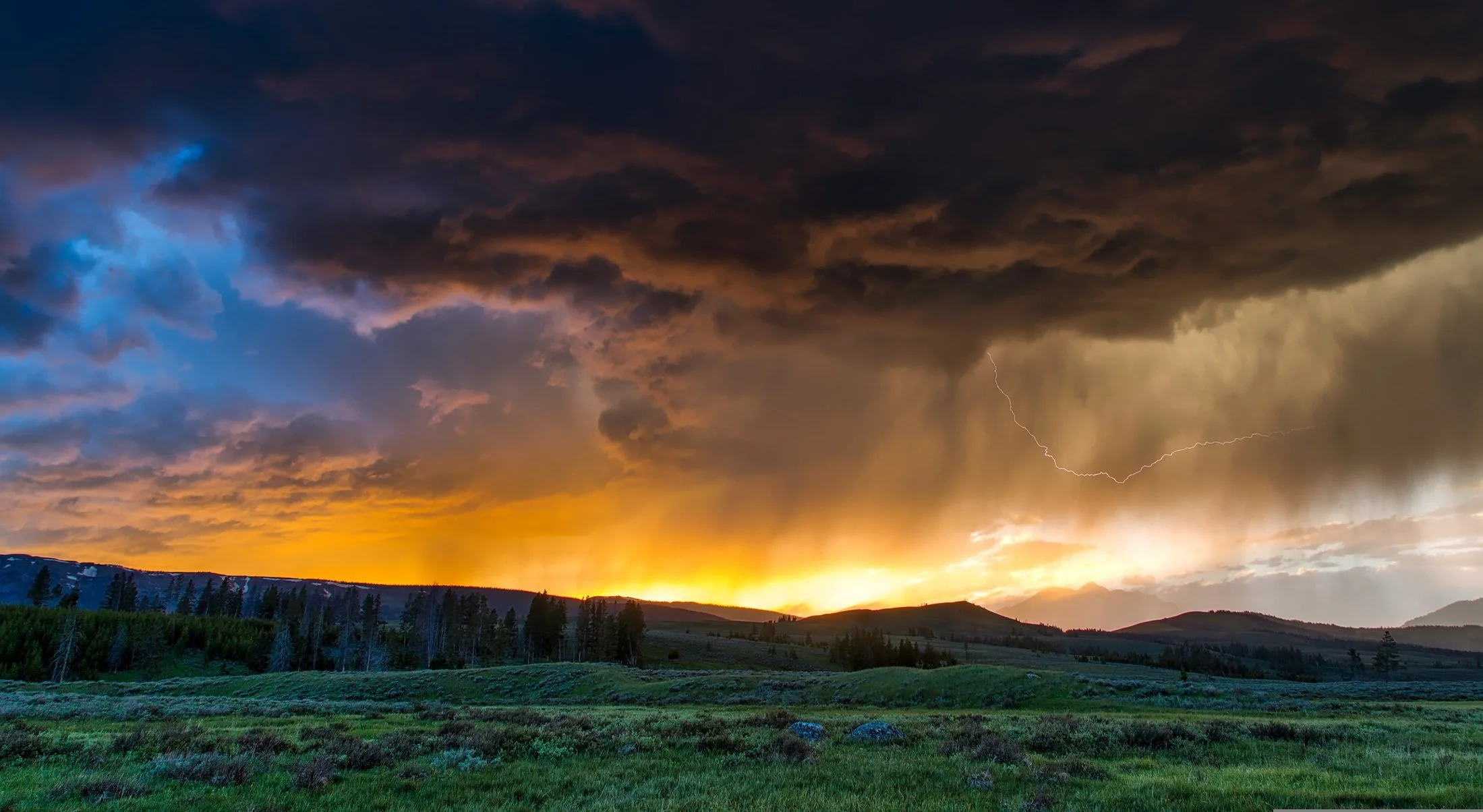
Discover Yellowstone at your own pace with Drives & Detours — Pixabay
Yellowstone National Park is too vast, too historic, and too wild to be seen through the window of a rushed charter bus. You deserve to pull over when a bald eagle soars overhead. You deserve to linger at the Grand Canyon of the Yellowstone until the light is just right. You deserve the freedom of the open road.
But independent travel shouldn't mean sacrificing deep, expert knowledge.
With the Yellowstone Grand Loop Audio Tour from Drives & Detours, you get the best of both worlds. Our GPS-triggered audio guide plays automatically as you drive, filling your car with rich history, geological insights, and behind-the-scenes stories about the park’s most iconic sights.
It’s like having an expert guide sitting in your passenger seat, pointing out hidden gems and explaining the science of the geysers—all while you remain completely in control of the steering wheel and the schedule.
Download the tour, start the engine, and get ready to experience Yellowstone exactly the way it was meant to be seen: on your own terms.
Frequently Asked Questions About the Top Sights in Yellowstone
How do I avoid the heaviest crowds at the most popular sights?
The secret lies in outpointing the tour bus schedules. For wildlife viewing in areas like Lamar Valley, arrive at dawn when animals are most active and the park is quiet. For major geothermal features like Grand Prismatic or Old Faithful, step off the main boardwalks. Utilizing nearby trailheads—like the short hike to the Grand Prismatic Overlook—gives you a spectacular view without the elbow-to-elbow crowds.
Can I drive standard vehicles on all roads within the park?
Yes, standard cars can access the entire Grand Loop. In fact, traveling independently in a standard vehicle gives you distinct advantages over large RVs and commercial buses. For instance, the narrow, winding Upper Terrace Drive at Mammoth Hot Springs is restricted to smaller vehicles, allowing you to explore sections of the park that group tours literally cannot enter.
What is the best way to learn about the park's geology without a tour guide?
You don't need a rigid tour schedule to get expert context. A self-guided, GPS-triggered audio tour acts as a local expert in your passenger seat. It automatically syncs with your drive to explain the complex underground plumbing behind the geysers and the history of the landscape as you pass them, keeping you informed while you retain total control over your steering wheel and timeline.
Why are the hot springs in Yellowstone so brightly colored?
The brilliant rings of orange, yellow, and green seen in springs like Grand Prismatic are not chemical spills—they are entirely alive. They are created by thermophiles, which are heat-loving bacteria and microbes that thrive in different temperature zones of the boiling water. The deep blue in the center indicates completely sterile, ultra-hot water that absorbs all other wavelengths of light.
Is it safe to see wildlife up close in places like Lamar Valley?
Yellowstone is a wild ecosystem, not a zoo. Large mammals like bison, grizzly bears, and elk are unpredictable and highly protective of their space. Independent travelers should always maintain a safe, legal distance (at least 100 yards for bears and wolves, and 25 yards for other wildlife) and use turnouts, binoculars, or spotting scopes to observe safely without disrupting natural behaviors.
What is the significance of the Fishing Cone at Yellowstone Lake?
The Fishing Cone is a unique hydrothermal feature located right on the shoreline of West Thumb Geyser Basin. In the park's early days, conceptual frontiersmen discovered they could catch a cutthroat trout from the cold lake water and, without moving an inch or taking the fish off the hook, dunk it directly into the boiling hot spring cone to cook it instantly. Today, cooking fish here is strictly forbidden to protect the fragile feature, but it remains a legendary piece of park lore.