Walking Through History: Uncovering the Architectural Wonders of the Chicago Loop
A Self-Guided Journey Through Downtown Chicago's Most Iconic Streets and Stories

Every street corner in Chicago tells a story of visionary architects, pioneering engineers, and bold civic leaders — Margo / Unsplash
Few urban centers capture the spirit of ambition, resilience, and creative reinvention quite like downtown Chicago. Bounded by the Chicago River to the north and west and Lake Michigan to the east, the historic district known as the Loop stands as a living museum of architectural innovation. Every street corner tells a story of visionary architects, pioneering engineers, and bold civic leaders who transformed a swampy frontier trading post into a towering metropolis of steel and glass.
Exploring this dynamic district offers an unforgettable encounter with the past and present. For travelers seeking a deeper connection to the city without the constraints of rigid tour groups, a self-guided audio tour unlocks the hidden layers of the Loop.
By moving at their own pace, visitors can pause to admire intricate terra-cotta facades, trace the flow of the Chicago River, and uncover the remarkable history that shaped America's architectural capital.
Must-See Stops & Stories in the Loop
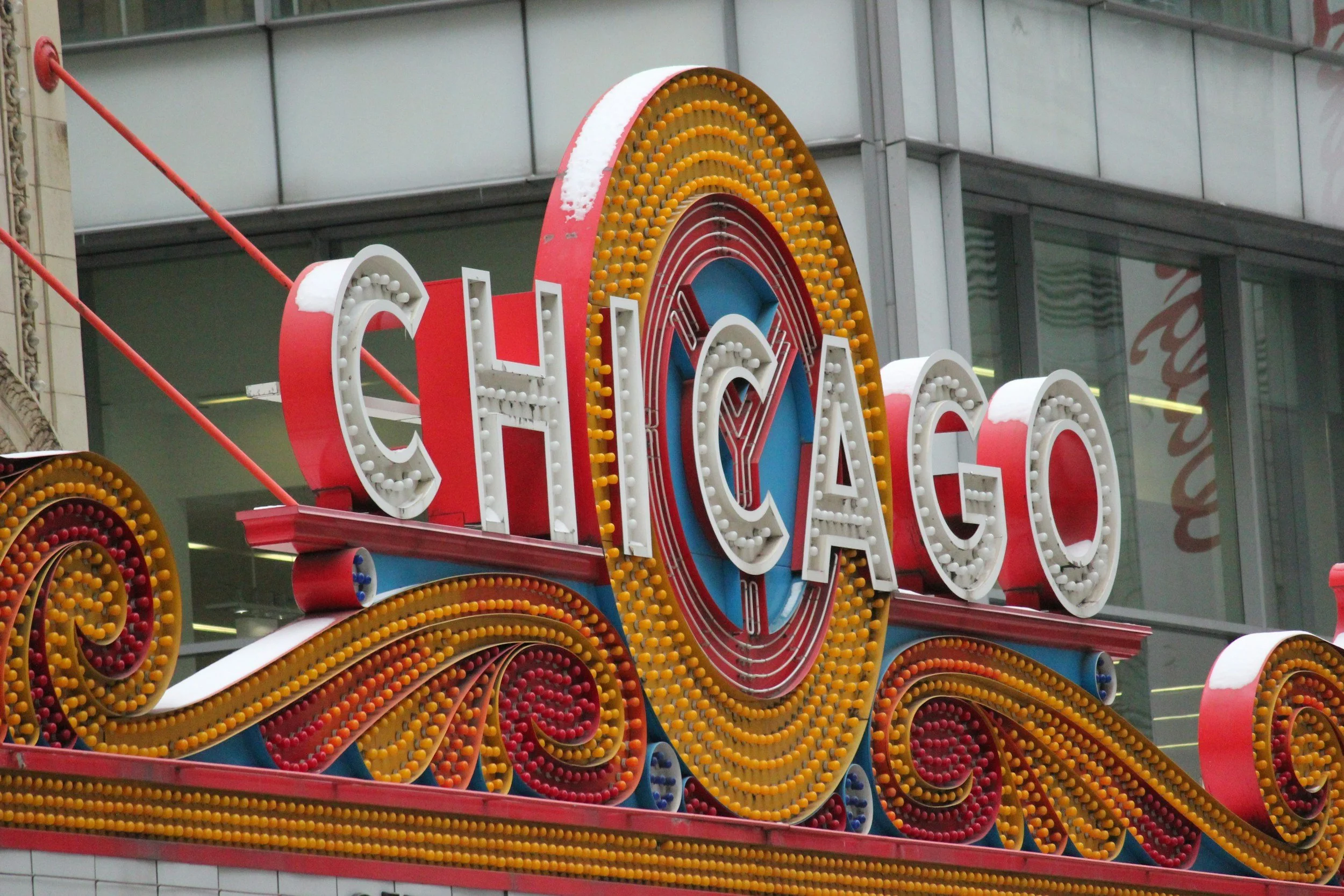
Chicago is full of iconic buildings and streetscapes — Frolicsome Fairy / Unsplash
Step away from the crowded tour groups and take control of your urban exploration. Here is a quick snapshot of the monumental architecture, hidden historical details, and world-class public art waiting for you downtown.
The Birth of the Skyscraper: Discover how the tragic Great Fire of 1871 paved the way for structural steel skeletons, giving rise to the Chicago School of architecture and early high-rises like the ornate Marquette Building
Sky-High Vantage Points: Stand above the grid at the Willis Tower, where the brave can step out onto the glass-floored Ledge at the 103rd-floor Skydeck for an unmatched view of the sprawling metropolis
Architectural Masterpieces: Wander through the financial district to admire the imposing Art Deco Board of Trade Building and the luminous, Frank Lloyd Wright-redesigned interior light court of The Rookery
River Engineering Up Close: Explore the inner workings of the city's massive double-deck bascule bridges at the McCormick Bridgehouse and Chicago River Museum, situated right inside the historic DuSable Bridge
Iconic Public Art: Stroll through Millennium Park to see the reflective curves of Cloud Gate (The Bean) and the interactive, water-spouting digital faces of the Crown Fountain
Abstract Plaza Expressions: Encounter massive outdoor installations tucked seamlessly into the urban landscape, including Alexander Calder’s vivid red Flamingo and Pablo Picasso’s enigmatic, untitled steel sculpture
Ultimate Tour Flexibility: Move entirely at your own pace with offline, GPS-triggered audio narration that lets you pause for a coffee or linger longer at your favorite landmarks
From Ashes to Architectural Innovation
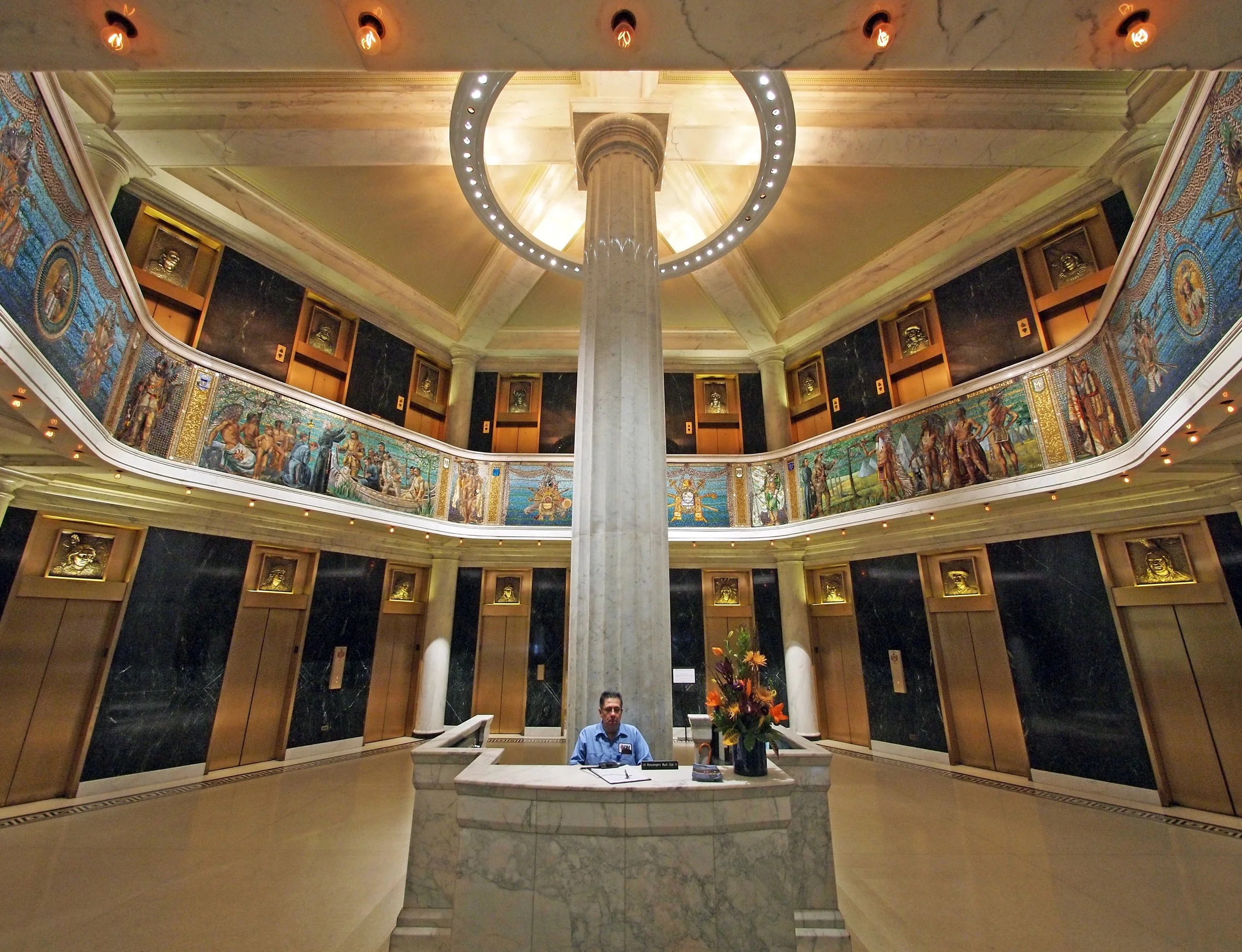
The Marquette Building showcases the revolutionary era of the Chicago School — John Picken Photo / CC 2.0
The story of the Loop begins not with its soaring skyscrapers, but with a catastrophe that nearly wiped the city off the map. In October 1871, the Great Chicago Fire swept through the downtown area, destroying thousands of buildings and leaving vast swaths of the city in smoldering ruins. Yet, out of the ashes emerged an unprecedented wave of creativity and urban planning.
Architects and engineers flocked to Chicago, viewing the destruction as a blank canvas. Freed from traditional building constraints, these visionaries pioneered the use of structural steel skeletons. This breakthrough allowed buildings to rise higher than ever before, giving birth to the world's first true skyscrapers. The Chicago School of architecture was born, characterized by large plate-glass windows, simplified ornament, and soaring vertical lines.
Walking through the Loop today means walking through the birthplace of modern construction. Historic structures like the Marquette Building, completed in 1895, showcase this revolutionary era with intricate exterior terra cotta and radiant interior rotunda mosaics that honor the journeys of early explorers. Each building serves as a testament to a city that refused to stay defeated, rebuilding itself taller, stronger, and more brilliant than before.
Icons of Steel and Stone: The Masterpieces of the Loop
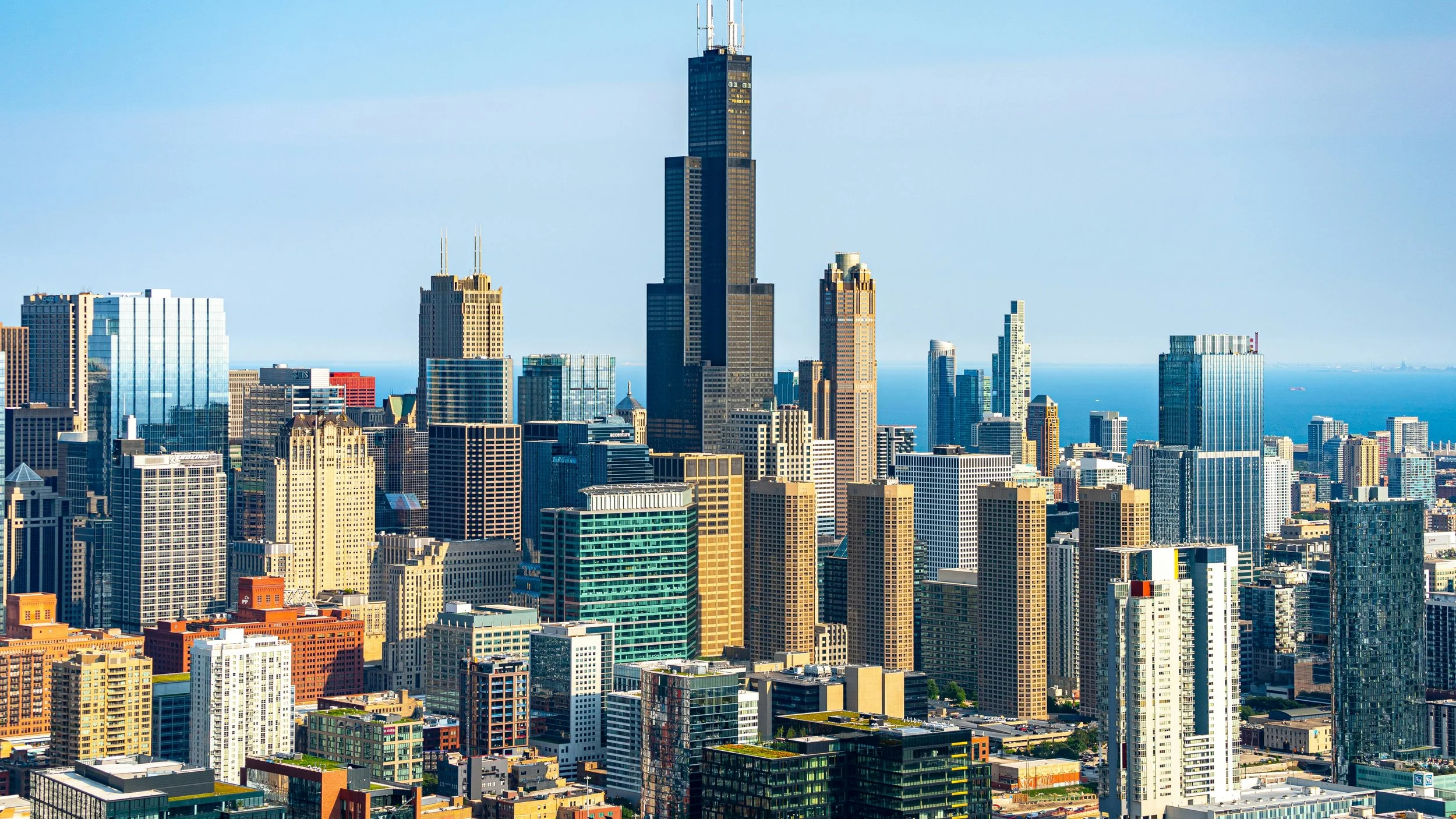
The Willis Tower dominates the skyline of Chicago — Curt Rochon / Unsplash
The dense urban grid of the Loop contains some of the most celebrated architectural achievements in the world. Dominating the skyline is the towering presence of the Willis Tower, formerly known as the Sears Tower. For decades, it held the title of the tallest building on Earth, and its dark aluminum and bronze-tinted glass facade remains an unmistakable symbol of Chicago's economic might. Visitors ascending to the 103rd-floor Skydeck and stepping out onto The Ledge experience a breathtaking perspective suspended high above the bustling streets.
Moving deeper into the financial district, the Chicago Board of Trade Building commands attention with its imposing Art Deco design and the gleaming statue of Ceres, the goddess of agriculture, perched atop its peak. This grand skyscraper reflects the city's history as a global hub of commerce and commodity trading.
Just blocks away lies the Rookery Building, a true architectural marvel. As one of Chicago's oldest surviving high-rises, it combines robust Romanesque Revival exterior masonry with a luminous, light-filled interior court that was later redesigned by Frank Lloyd Wright. The interplay of iron, marble, and natural light within the Rookery demonstrates how early designers successfully merged structural engineering with refined artistic elegance.
Waterways and engineering feats are equally integral to the Loop's identity. Spanning the Chicago River, the DuSable Bridge serves as a vital artery connecting the north and south sides of the city. Its decorative bridgehouses pay tribute to Jean Baptiste Point du Sable, the Haitian pioneer recognized as the founder of Chicago, while celebrating the intricate mechanics of double-deck bascule bridges. Stepping inside the McCormick Bridgehouse and Chicago River Museum reveals the massive gears that lift these historic spans, offering a fascinating look at how the river itself fueled the development of the city.
Public Art That Defines the Urban Landscape
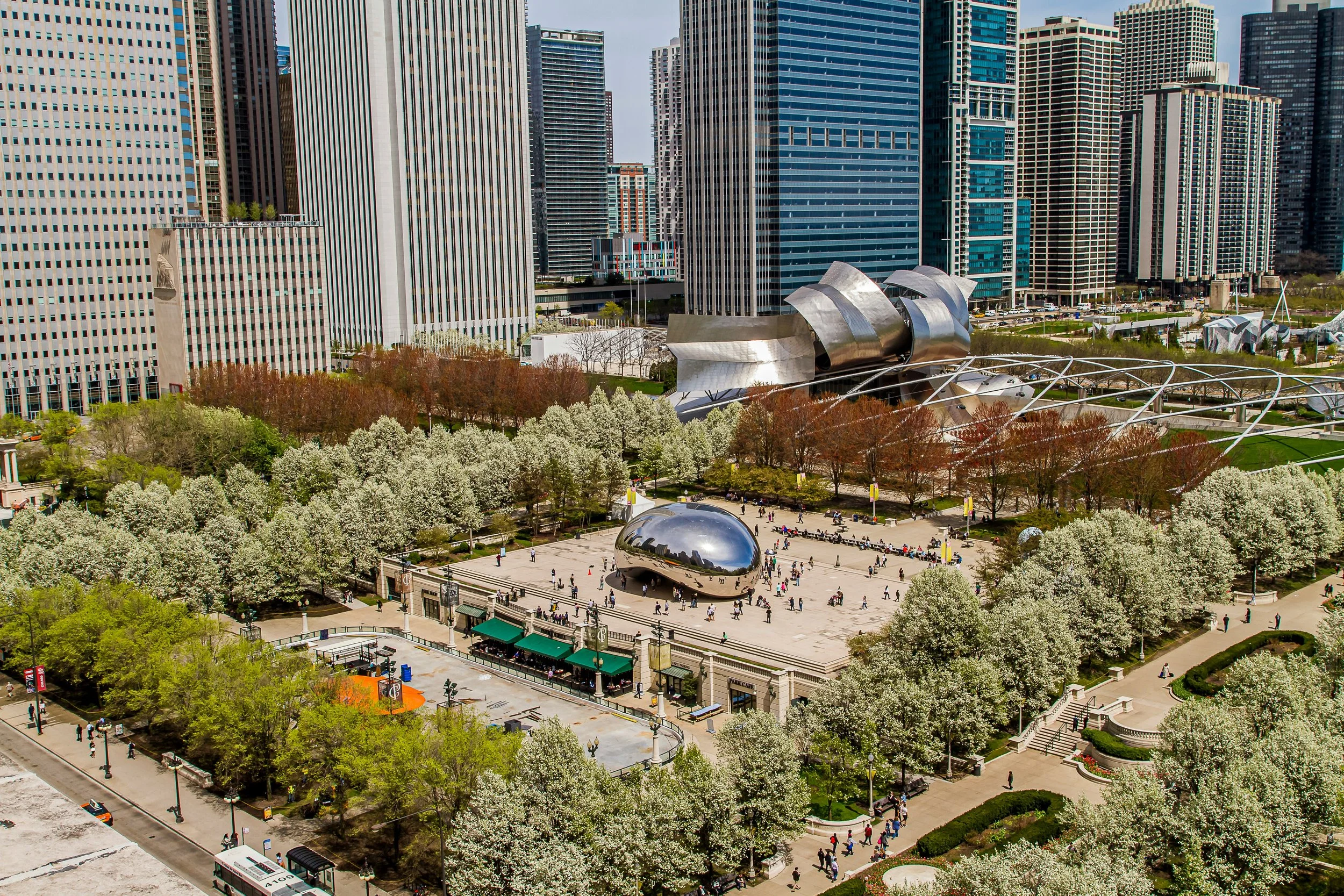
Public art in downtown Chicago is woven into the daily rhythm of urban life — Dulcey Lima / Unsplash
Beyond its buildings, the Loop functions as an open-air art gallery where world-class sculptures and installations surprise and delight pedestrians at every turn. Public art in downtown Chicago is not tucked away behind museum walls; it is woven into the daily rhythm of urban life.
In Millennium Park, Cloud Gate—affectionately known to locals and visitors alike as The Bean—has become an iconic symbol of the modern city. Created by artist Anish Kapoor, The Bean’s mirror-like stainless steel surface reflects the shifting clouds, towering skyscrapers, and faces of passersby. Walking beneath its soaring arch offers a distorted, playful view of the surrounding metropolis.
Nearby, the Crown Fountain presents a striking blend of video technology and interactive public space, featuring towering glass-block towers that display digital portraits of Chicago residents. A short walk away, the Jay Pritzker Pavilion showcases the flowing steel ribbons and acoustic genius of architect Frank Gehry, anchoring the park as a vibrant venue for community and performance.
Venturing into the surrounding plazas reveals a dynamic contrast between modernism and abstract expression. Alexander Calder's vivid red sculpture, Flamingo, stands boldly in Federal Plaza, its sweeping curves injecting a burst of organic energy into the rigid geometric grid of the surrounding federal buildings. In Daley Plaza, the monumental abstract sculpture gifted to the city by Pablo Picasso sparks constant curiosity, inviting viewers to interpret its enigmatic form without a prescribed narrative.
Further cultural treasures await indoors, such as the Chicago Cultural Center. Once serving as the city's main library, this magnificent building features the world's largest Tiffany glass dome, glowing with intricate mosaics and mother-of-pearl accents that remind visitors of Chicago's dedication to civic beauty and public education.
Experience Chicago at Your Own Pace With a Self-Guided Audio Tour
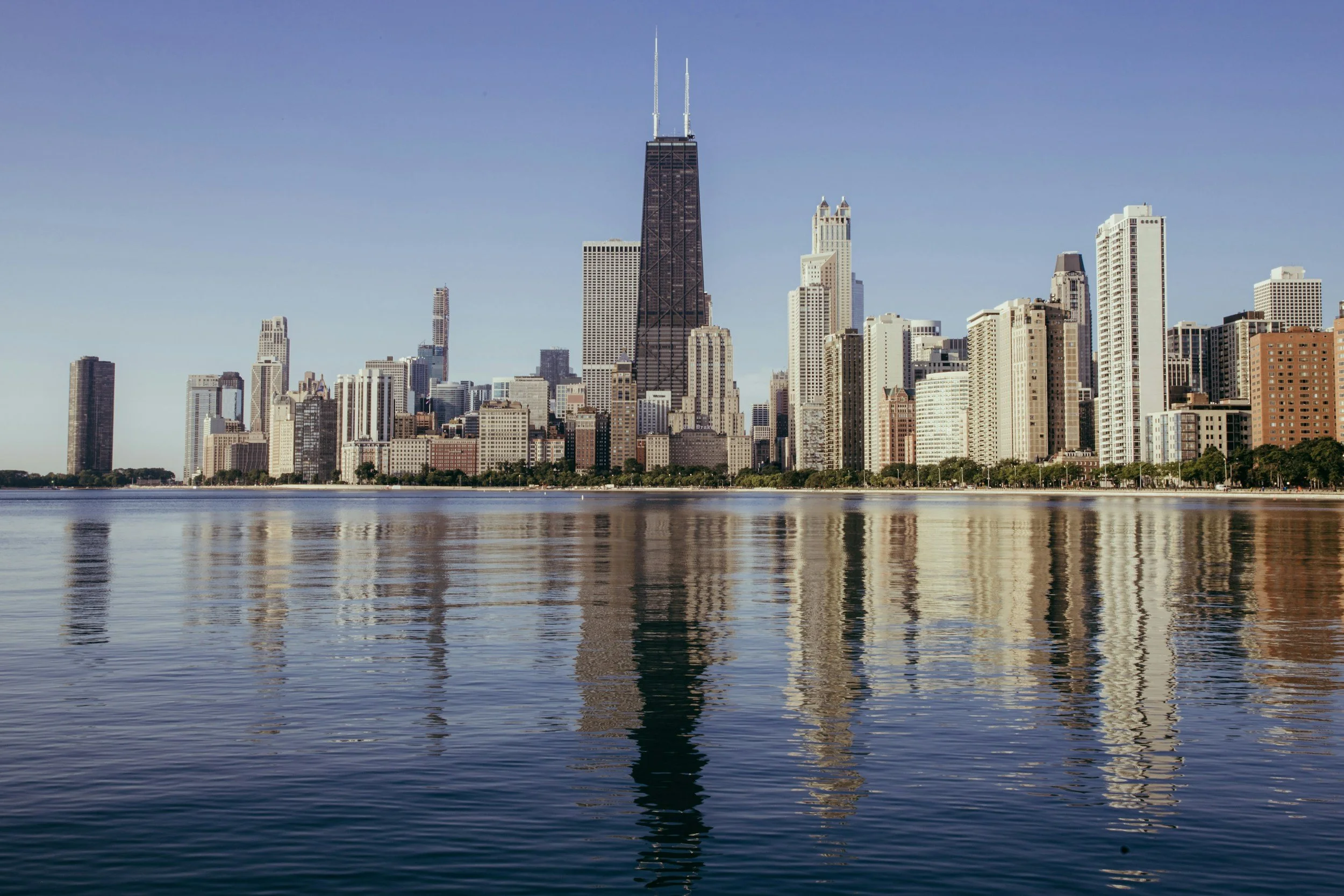
Discover the Chicago Loop at your own pace with Drives & Detours — Stephan Cassara / Unsplash
Navigating a dense historic district packed with centuries of stories can feel overwhelming without a reliable companion. Traditional guided tours often rush through locations, tether participants to rigid schedules, and miss the subtle details hidden in plain sight. Modern travelers demand flexibility, depth, and authenticity.
Taking a self-guided audio tour transforms an ordinary walk into an immersive storytelling adventure. Utilizing GPS-triggered narration, the audio experience unfolds naturally as the traveler approaches each landmark, providing rich historical context, architectural insights, and local anecdotes right when they matter most.
The beauty of a self-guided journey lies in absolute freedom. There is no need to rush past a breathtaking view or stress over missing a group departure. Visitors can pause their tour to grab a coffee at a historic café, step inside the Art Institute to admire masterworks, or linger on the riverfront to watch the boats pass beneath the historic bridges.
Preparation is simple and ensures a seamless experience. Downloading the tour ahead of time eliminates any reliance on cellular data, allowing the narration to play smoothly even in the deepest urban canyons. Paired with comfortable walking shoes and a pair of headphones, explorers gain the perspective of an expert local guide while retaining total control over their itinerary.
The Chicago Loop is more than a collection of famous buildings and monuments; it is a living narrative of ambition, artistry, and reinvention. From the pioneering spirits who rebuilt a city of steel after the Great Fire to the contemporary designers shaping Millennium Park, downtown Chicago invites everyone to look up, slow down, and discover the layers of history beneath their feet. Embark on the ultimate exploration of the Windy City with a self-guided audio tour and experience the heart of Chicago on your own terms.
Frequently Asked Questions About the Chicago Loop Walking Tour
Do I need cellular data to take the self-guided audio tour?
Not at all. We highly recommend downloading the tour via the Drives & Detours app before you head out. Once downloaded, the GPS-triggered narration works entirely offline, saving you from spotty cell signals between those towering steel skyscrapers.
How much walking is involved, and is the route accessible?
The Loop tour covers approximately three miles of walking. The path is mostly flat and follows well-paved city sidewalks, making it generally friendly for strollers and wheelchairs.
Will the tour take me inside the buildings?
The audio guide is designed to navigate you through the streets, focusing on the striking exteriors, public plazas, and broader historical narratives of the city. However, because you set the pace, you have the total freedom to pause the narration and step inside public spaces—like the breathtaking Chicago Cultural Center or the Rookery lobby—whenever you like.
What happens if it rains or snows on the day I planned to walk?
That is the beauty of independent travel. Your purchased tour never expires. If the Windy City weather turns sour, simply hold off, grab a deep-dish pizza, and take the tour on a clearer day.
Are there admission fees for the landmarks mentioned on the tour?
Viewing the architecture and public art from the street or park is entirely free. If you choose to pause your walk to visit interior attractions like the Willis Tower Skydeck, the Art Institute of Chicago, or the McCormick Bridgehouse, you will need to purchase separate admission tickets directly from those venues.
Where exactly does the route begin?
Your journey kicks off right at the DuSable Bridge, which crosses the Chicago River on Michigan Avenue. It is the perfect starting point to understand how the waterways shaped the city before you dive deep into the canyon of historic skyscrapers.