Uncovering Chicago’s Best Kept Secrets: 5 Hidden Gems Beyond The Bean
Ditch the Crowds at Navy Pier and Discover the Windy City’s Quiet Courtyards, Subterranean Labyrinths, and Offbeat History

The real magic of Chicago lies hidden in plain sight, tucked away in its diverse neighborhoods — Gautam Krishnan / Unsplash
Chicago is world-renowned for its soaring architecture, deep-dish pizza, and iconic public art. Most first-time visitors naturally flock to Cloud Gate (affectionately known as The Bean), cram onto the Navy Pier Ferris wheel, or elbow their way through the bustling retail corridors of the Magnificent Mile. While these massive attractions are famous for a very good reason, they only scratch the surface of what the Second City truly has to offer.
The real magic of Chicago lies hidden in plain sight. It is tucked away in its diverse neighborhoods, concealed within historical underground corridors, and blooming in quiet architectural marvels that most tourists completely miss. If you want to experience the Windy City like a true local, you need to step off the beaten path and look beyond the glossy tourist brochures.
The absolute best way to navigate these sprawling streets, decode the city's rich architecture, and uncover these secret spots without getting hopelessly lost is by plugging into a smart, locally crafted guide. Before you lace up your walking shoes to explore, grab the Drives & Detours Downtown Chicago Loop Audio Tour. It is your hassle-free, pocket-sized companion for exploring the city's hidden history at your own pace—no crowded tour buses or rigid schedules required.
Here are five of the best hidden gems in Chicago to add to your itinerary right now.
Decoding Chicago's Secret Layers
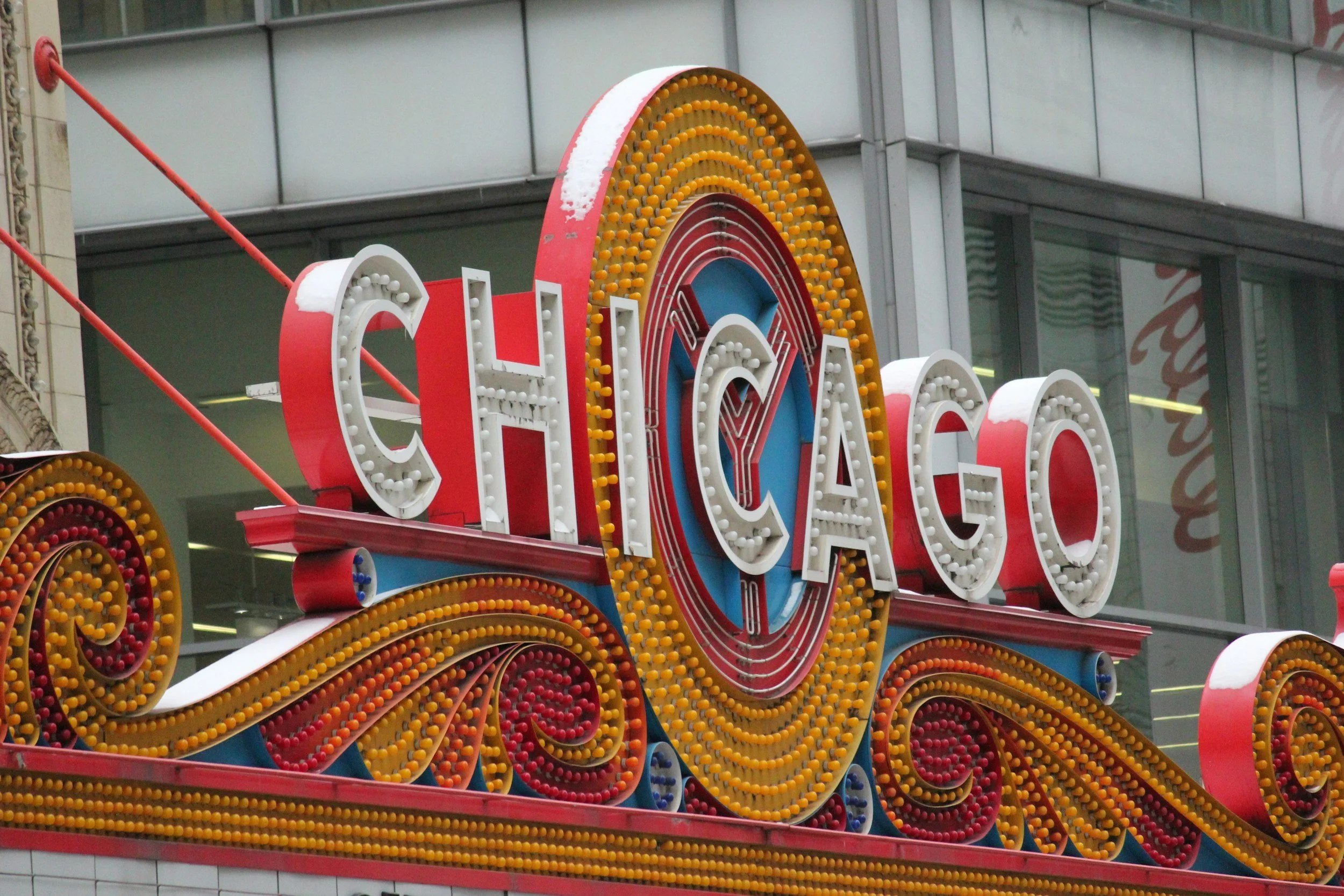
Ditch the generic Instagram spots and discover the real Chicago — Frolicsome Fairy / Unsplash
Ditch the massive crowds and the generic photo ops. Here is your cheat sheet to the quiet gardens, subterranean labyrinths, and macabre histories tucked away just out of sight in the Second City.
A Prairie School Sanctuary: The Alfred Caldwell Lily Pool is a beautifully designed, limestone-lined refuge offering a meditative escape right in the bustling heart of Lincoln Park
The Subterranean City: The Chicago Pedway System is a 40-block underground maze hiding stained-glass art, local cafes, and the ultimate local hack for dodging harsh weather
World's Fair Relics: Far south in Jackson Park, the Garden of the Phoenix preserves 1893 World’s Columbian Exposition history with serene koi ponds, cherry blossoms, and contemporary art by Yoko Ono
Skyline Views by Water Taxi: Ping Tom Memorial Park in Chinatown contrasts traditional pagoda pavilions with striking, uncrowded vantage points of the Sears (Willis) Tower
Macabre Medical History: The Gold Coast’s International Museum of Surgical Science houses antique medical tools and an original iron lung inside a breathtaking 1917 lakefront mansion
Independent Exploration: Skip the rigid group excursions and plug into a self-guided audio companion like Drives & Detours to uncover the Loop’s architecture entirely on your own schedule
Strategic Timing: Visit popular but niche spots, like the Surgical Science museum, on a quiet Tuesday morning to get the artifacts and upper-floor lake views all to yourself
1. The Alfred Caldwell Lily Pool: A Hidden Prairie Oasis
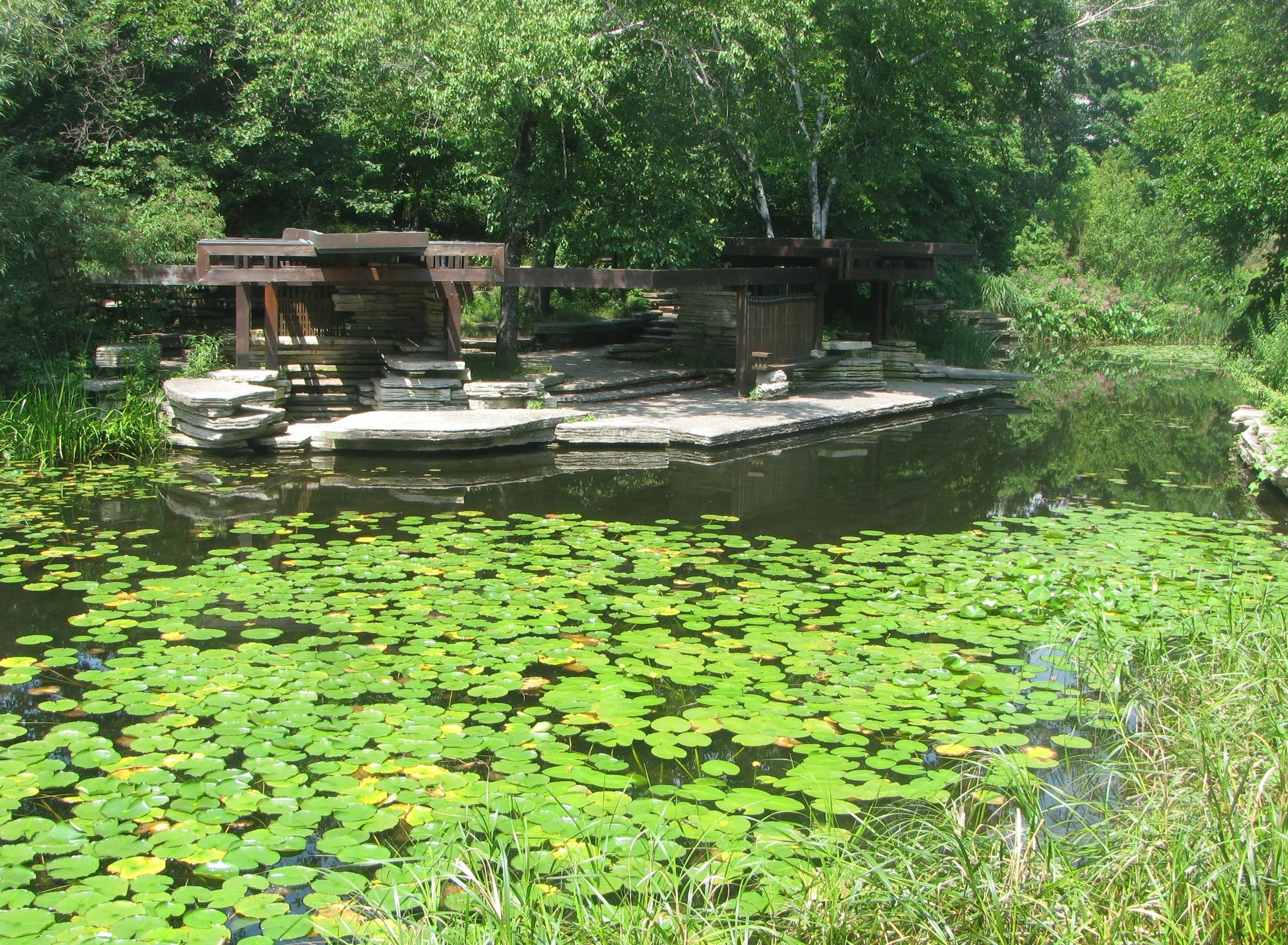
Alfred Caldwell cashed in his own life insurance policy to finish the lily pool in Lincoln Park — TonyTheTiger / CC 3.0
Just steps away from the chaotic, stroller-filled paths of the Lincoln Park Zoo lies one of the most serene and beautifully designed spaces in the entire Midwest. The Alfred Caldwell Lily Pool is a masterful example of Prairie School landscape architecture, designed in the 1930s as a sanctuary for the city's residents to escape the urban grind.
When you step through the unassuming wrought-iron gates, the sounds of traffic and crowds instantly fade away. You are greeted by a winding path of stratified limestone outcroppings, a gently cascading waterfall, and a circular council ring designed for quiet contemplation. In the summer, the pool is dotted with vibrant lily pads and darting dragonflies. Caldwell famously cashed in his own life insurance policy to buy the wildflowers for this project when the city cut his funding, and his passion is evident in every carefully placed stone and native plant.
Location: Lincoln Park (Fullerton Parkway & Cannon Drive)
Why it’s worth visiting: It offers an incredibly peaceful, meditative escape right in the middle of the city's most visited park
Actionable Takeaway: Grab a coffee from a nearby café in Lincoln Park and bring a book. Arrive early in the morning for the best chance of having this secret garden entirely to yourself
2. The Chicago Pedway System: A Subterranean Labyrinth
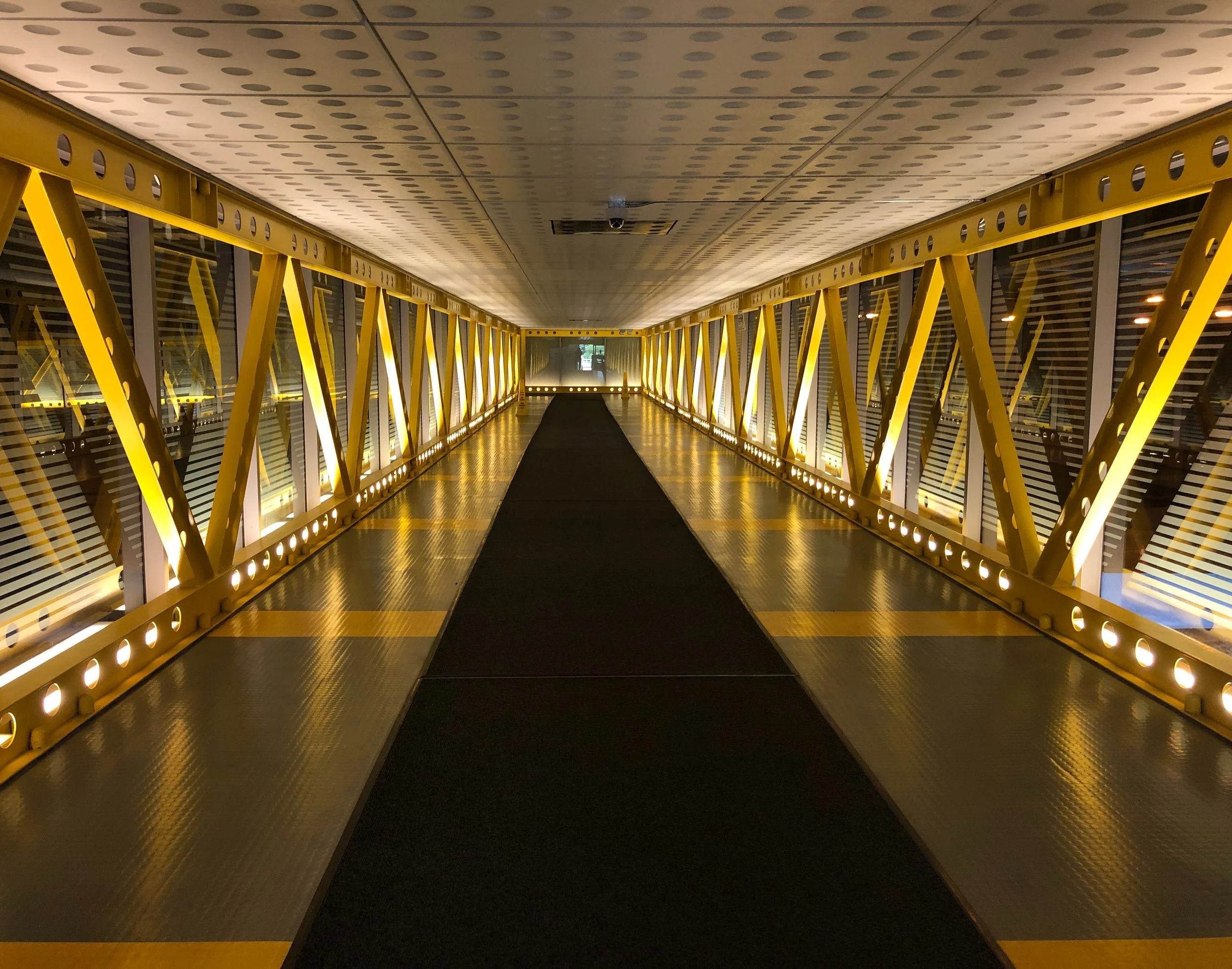
The Chicago Pedway is a covered network that connects downtown during winter — Aaron Volkening / CC 2.0
If you are exploring the downtown core, you might notice locals seemingly vanishing into thin air during the freezing winter months or sweltering summer afternoons. Their secret? The Chicago Pedway System.
Spanning more than 40 blocks, this network of underground tunnels and overhead bridges connects skyscrapers, train stations, and government buildings throughout the Loop. While parts of it look like standard utilitarian tunnels, other sections hold fascinating secrets. If you know where to look, you can find a stunning stained-glass compass embedded in the ceiling beneath Macy’s on State Street, underground cafes, hidden art exhibits, and even a subterranean swimming pool visible from the corridors.
Navigating the Pedway can feel like solving a puzzle, making it a thrilling urban adventure for architecture and history buffs. It's the perfect complement to your downtown explorations.
Location: Entrances are scattered throughout the Downtown Chicago Loop (look for the black and yellow compass logo)
Why it’s worth visiting: It is the ultimate local hack for beating the infamous Chicago weather while discovering bizarre underground art and architecture
Actionable Takeaway: Use the Pedway to walk from the Millennium Station to City Hall without ever stepping outside. Combine this with the Drives & Detours Downtown Chicago Loop Audio Tour to get your bearings above ground before diving below
3. Garden of the Phoenix: A Japanese Sanctuary in Jackson Park

The Garden of the Phoenix is a quiet refuge with moon bridges and a traditional Kasuga lantern — Jules Verne Times Two / CC 4.0
Way down on the city's South Side, nestled on a wooded island in Jackson Park, sits a breathtaking reminder of the 1893 World’s Columbian Exposition. The Garden of the Phoenix (formerly known as the Osaka Garden) was originally built as a pavilion to introduce traditional Japanese art and architecture to the United States.
Today, this quiet refuge features weeping willows, traditional Japanese moon bridges, koi ponds, and a traditional Kasuga lantern. In the spring, the garden is surrounded by gorgeous, blooming cherry blossom trees that rival those in Washington, D.C., but with a fraction of the crowds. More recently, renowned artist Yoko Ono installed Skylanding, a beautiful lotus-shaped steel sculpture that serves as a symbol of peace, right outside the garden gates.
Location: Jackson Park (6401 S. Stony Island Ave, on the Wooded Island)
Why it’s worth visiting: It combines World's Fair history with stunning, manicured nature and world-class contemporary art, far away from the chaotic downtown tourist zones
Actionable Takeaway: Rent a Divvy bike and ride the Lakefront Trail south to Jackson Park. Pair your visit with a stop at the nearby Museum of Science and Industry, the only major building left standing from the 1893 World's Fair
4. Ping Tom Memorial Park: Skyline Views on the River
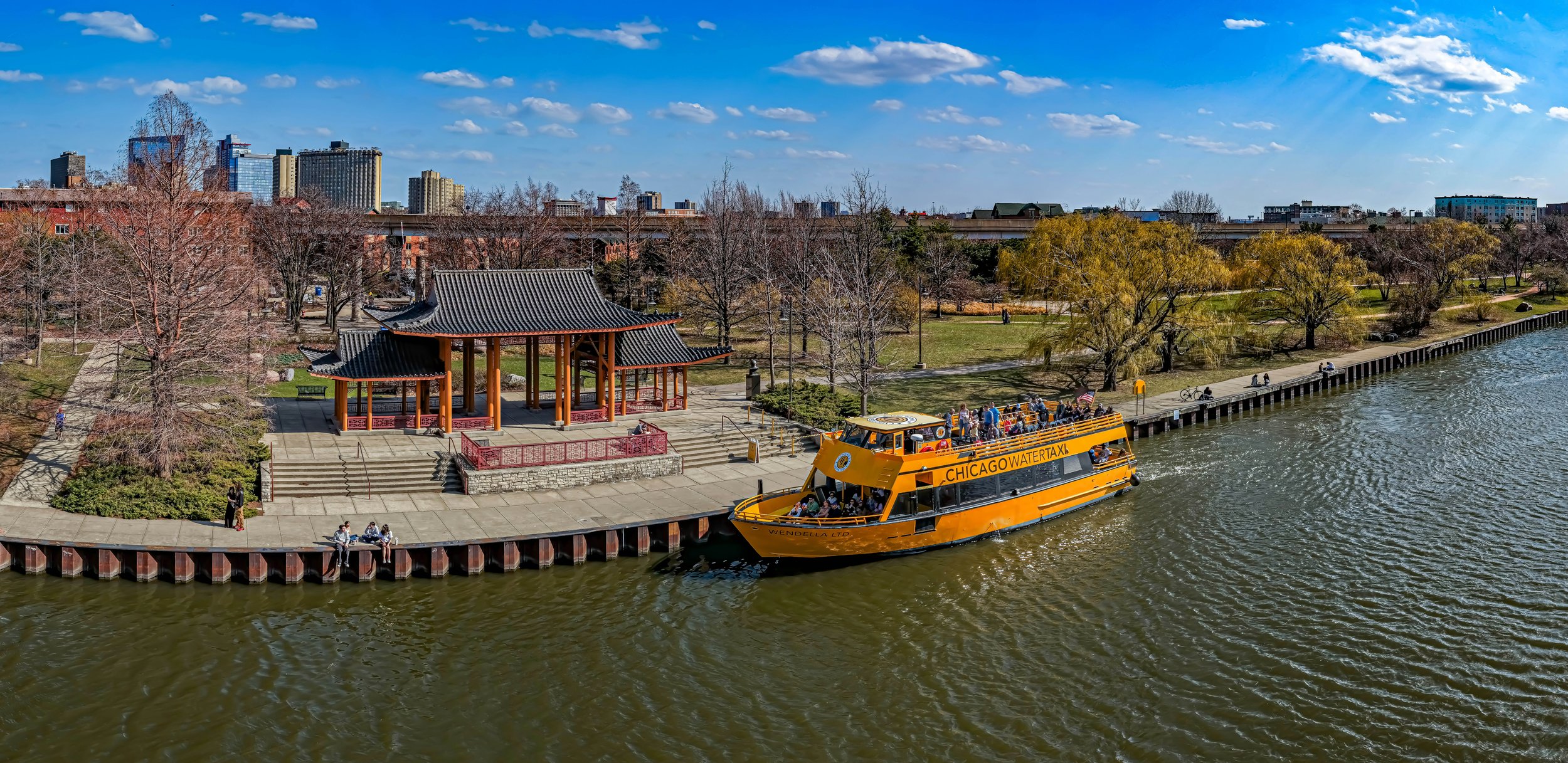
Ping Tom Memorial Park transformed an abandoned, industrial rail yard — Jay Patel / Unsplash
Most visitors take an architectural boat tour down the Chicago River, but very few venture far enough south to discover Ping Tom Memorial Park. Located in the heart of Chinatown, this 12-acre park transformed an abandoned, industrial rail yard into a vibrant community gathering space with some of the most unique vantage points of the Chicago skyline.
The park features striking, pagoda-style pavilions, bamboo gardens, and a beautiful boardwalk that skirts the edge of the river. Because it sits at a bend in the South Branch of the Chicago River, the juxtaposition of the traditional Chinese architectural elements against the towering steel and glass of the distant Sears Tower (Willis Tower) is a photographer's dream.
Location: Chinatown (1700 S. Wentworth Ave)
Why it’s worth visiting: It offers an unbeatable, uncrowded view of the skyline and serves as a gorgeous gateway to one of Chicago’s best culinary neighborhoods
Actionable Takeaway: Take the Chicago Water Taxi directly from the downtown Loop down to the Chinatown stop. Explore the park, then walk a few blocks east to Wentworth Avenue for some of the best dim sum in the Midwest
5. International Museum of Surgical Science: Macabre History in a Mansion
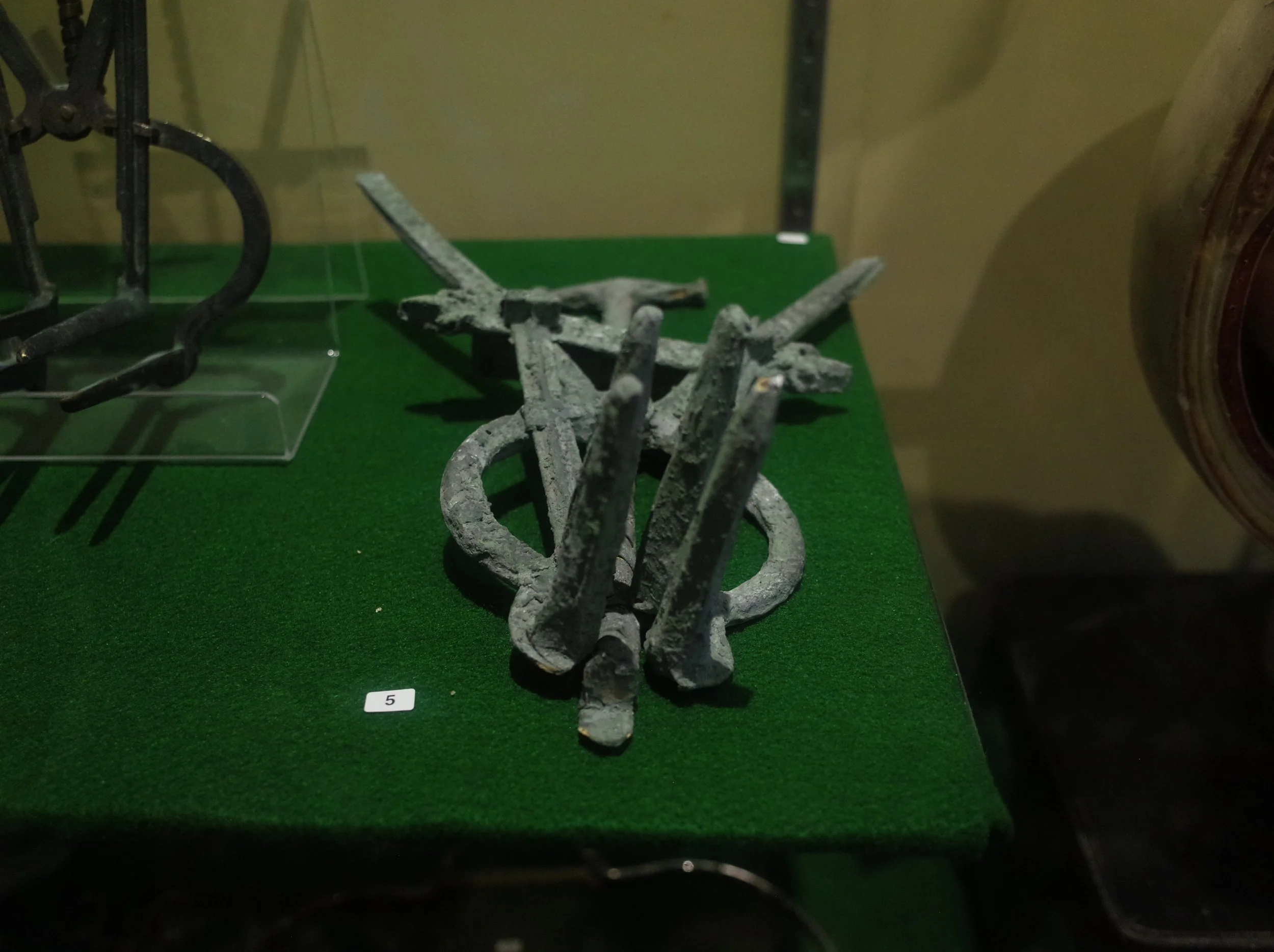
The International Museum of Surgical Science is definitely offbeat and bizarre — Tomislav Medak / CC 2.0
While tourists line up for hours outside the Field Museum or the Art Institute, those with a taste for the bizarre and offbeat should head north to the Gold Coast neighborhood. Housed inside a stunning, 1917 historic lakefront mansion built for socialite Eleanor Robinson Countiss is the International Museum of Surgical Science.
This unique museum is North America's only institution dedicated to the history of surgery. As you wander through the grand, marble-floored rooms of the mansion, you'll encounter a fascinating—and sometimes macabre—collection of ancient medical artifacts. You can view antique amputation saws, an original iron lung, historical apothecary jars, and ancient Roman surgical tools.
The contrast between the luxurious, Gilded Age architecture and the gritty, fascinating reality of medical history makes this a truly unforgettable hidden gem. Be sure to visit the wood-paneled library on the second floor, which offers incredible views of Lake Michigan.
Location: The Gold Coast (1524 N. Lake Shore Drive)
Why it’s worth visiting: It is a perfect blend of historic Chicago mansion architecture and deeply weird, fascinating historical artifacts
Actionable Takeaway: Go on a Tuesday. The museum is generally quieter during the week, allowing you to take your time reading the fascinating plaques and admiring the lake views from the upper-floor windows
Become an Urban Explorer on the Chicago Loop
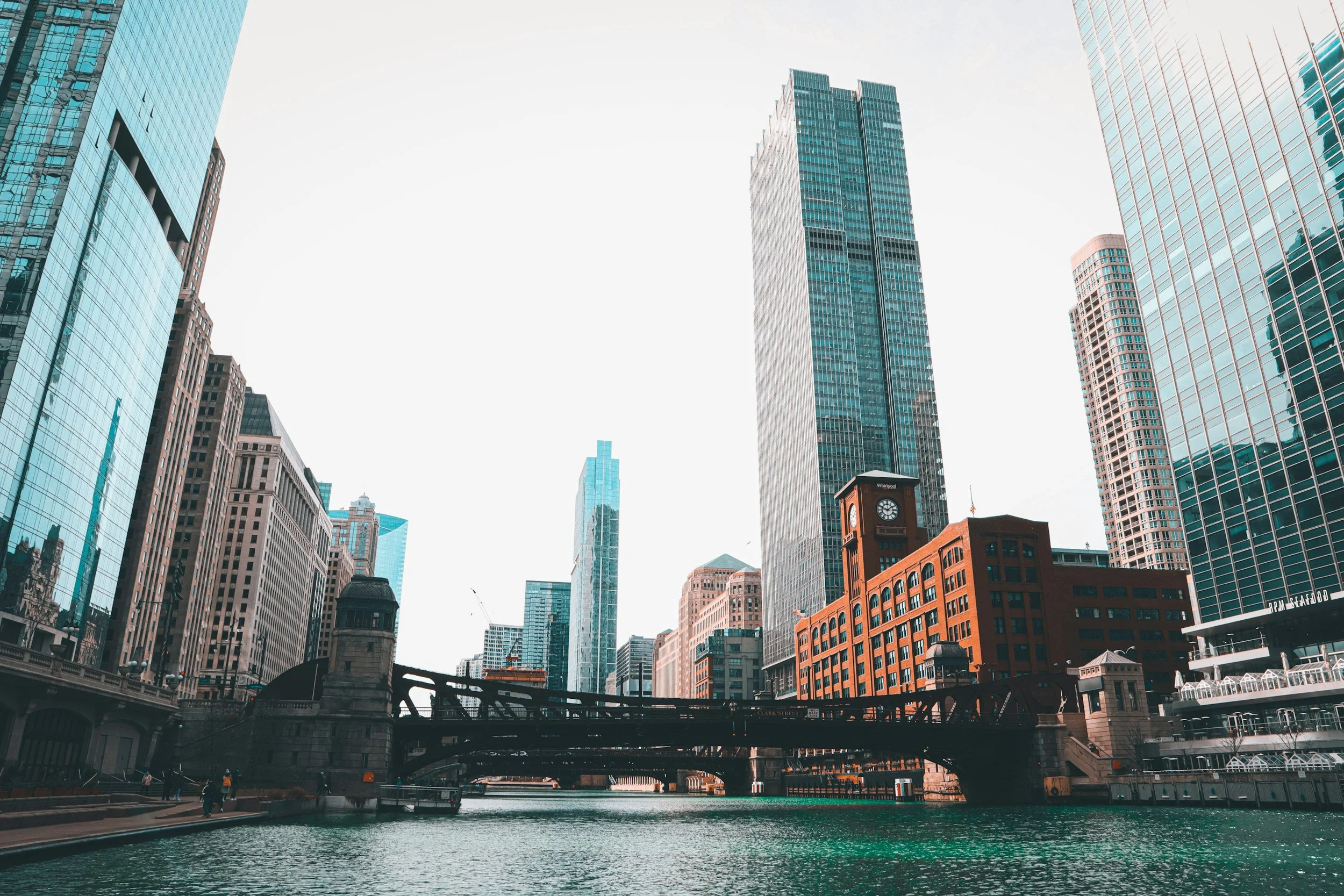
Discovering Chicago shouldn't just be about checking iconic monuments — Alejandro DLT / Unsplash
Visiting a world-class city like Chicago shouldn't just be about checking iconic monuments off a standard list; it should be about feeling the rhythm of the city and uncovering the stories hidden in its masonry, parks, and tunnels. By trading the packed, generic tourist traps for quiet prairie-style gardens, subterranean labyrinths, and quirky historical mansions, you transition from being a mere tourist to becoming a true urban explorer.
Ready to discover the architectural wonders and historical secrets of the Windy City on your own terms? Leave the crowded group tours behind and let a local guide show you the ropes through your headphones.
Download the Drives & Detours Downtown Chicago Loop Audio Tour today, and start uncovering Chicago’s best-kept secrets at your exact pace!
Frequently asked questions about uncovering hidden Chicago
Do I need a car to reach these off-the-beaten-path spots?
Not at all. Chicago’s public transit network is incredibly efficient. The CTA train system (the L) and extensive bus routes will easily get you to places like the Lily Pool or the Gold Coast. For Ping Tom Memorial Park, you can even take the scenic Chicago Water Taxi, and Jackson Park is highly accessible by renting a Divvy bike and riding south along the Lakefront Trail.
How do locals survive the freezing winters or sweltering summers while walking downtown?
They go underground. The Chicago Pedway System is a massive, 40-block network of climate-controlled tunnels and overhead bridges in the Loop. It connects major skyscrapers, government buildings, and transit stations, making it the perfect shortcut when the weather takes a turn.
How much time should I set aside to explore the downtown Loop and its architecture?
To properly absorb the architectural details, public art, and hidden corners of the Loop without rushing, dedicate at least a half-day (3 to 4 hours). Using a self-guided audio tour is ideal for this, as it keeps you oriented while allowing for spontaneous detours.
Where is a good place to grab food after visiting Ping Tom Memorial Park?
Just walk a few blocks east of the park to Wentworth Avenue in the heart of Chinatown. The neighborhood is renowned for having some of the absolute best, most authentic dim sum in the Midwest.
I want to see cherry blossoms, but I hate massive crowds. Where should I go?
Head to the Garden of the Phoenix in Jackson Park during the spring. The blooming cherry blossom trees here rival those you'd find in Washington, D.C., but they come with a fraction of the tourists, allowing for a much more peaceful experience.
Why should I use a self-guided audio tour instead of booking a traditional walking tour?
Independent travel means moving at your own pace. Traditional group tours lock you into rigid schedules, force you to walk at the speed of the slowest person, and often struggle to fit a crowd into intimate spaces like the Pedway or quiet courtyards. A self-guided app acts like a local friend in your pocket, letting you pause for a coffee or linger at an exhibit whenever you choose.